
Executive Summary
I am requesting 60,000 HBD over 12 months to release Liketu's application and server code under the MIT licence, maintain the product, and deliver focused improvements to onboarding, publishing, and mobile reliability.
Liketu provides a visual social entry point into Hive through photos, short updates, voice, and interaction around them. Hive receives the underlying application code for other builders to use and extend, together with a year of continued development and maintenance. The source release is the first milestone, due within 30 days of funding. Public issues, release notes, and monthly spending and progress reports will make delivery visible.
That foundation now includes Fitbook, which connects digital closets, styling, and shared looks to Hive, and Health and Run, with meal logging, private run imports, training trends, and coaching. Liketu Credits used by Fitbook provide an implemented route to paid features. Recent work also redesigned Wild, Atlas, and Speak, with richer wildlife discovery, photo maps and travel journals, and visual voice publishing. These are existing additions to the codebase being offered, with their current scope described below.
The budget is 35,000 HBD for my work, 18,000 HBD for essential operations, 5,000 HBD for targeted specialist help, and 2,000 HBD for contingency. There is no separate payment for past development or for releasing the code.
The request reflects Hive's market position and limits my compensation to 35,000 HBD for the year, approximately 2,916.67 HBD per month. The essential operating allowances and delivery commitments remain intact. Hive receives an existing codebase built through eight years of private investment, its release as a public resource, and another year of focused development and stewardship, with no separate charge for the work already completed.
The Request At A Glance
| Item | Request |
|---|---|
| Total funding | 60,000 HBD |
| Duration | 12 months, budgeted as 365 days |
| Average daily funding | Approximately 164.38 HBD |
| Intended receiver | @liketu |
| First milestone | Usable public application and server source within 30 days of funding |
| Reporting | Monthly progress, releases, spending, and usage measures |
The daily figure is a rounded planning average. For a 365-day proposal, 164.383 HBD per day requests 59,999.795 HBD, keeping the total within the 60,000 HBD ceiling. The final on-chain dates must cover that same duration. Reporting will distinguish the amount requested, received, spent, and remaining.
What Hive Receives
- Reusable software. Application and server code, Hive integrations, media handling, and onboarding work become available under the MIT licence, with setup instructions and contribution guidance.
- Continued stewardship. I will remain responsible for development, maintenance, releases, documentation, and reporting during the funded year.
- A product people can use. Work will focus on reliable account access, publishing, interaction, and mobile use. These are the paths through which the application contributes activity to Hive.
- Evidence of delivery. Each milestone has a defined output and a public record that stakeholders can inspect.
The public source and documentation give other builders a way to continue or adapt the work beyond this funding period. The product and community evidence later in this proposal shows the foundation being offered; the roadmap below defines the additional work this request funds.
Sustainability and Eight Years of Self-Funding
The question of sustainability is fair. Liketu's long-term ambition is to generate enough revenue to support its development and operation while contributing value to Hive.
For eight years, we have committed our own money and work to that ambition. We have continued operating, supporting users, and developing Liketu without prior DHF proposal funding. The product, releases, and community work documented below show the persistence behind this request through difficult market conditions.
We believed Hive's rewards system could help bootstrap participation while we built a compelling product around the protocol. In our experience, that has been challenging: the value of rewards and the attention available to applications are closely tied to Hive's wider market conditions. Building a product that can sustain itself through those conditions remains our responsibility.
There is also precedent for DHF support of front ends at larger historical totals. For example, Ecency reported receiving 166,865 HBD over a previous 15-month funding period. That covered a different period and scope; it provides context rather than a direct cost comparison. Liketu's request should be assessed against the public value, budget, and delivery commitments set out here.
This proposal asks for a substantially reduced 60,000 HBD over 12 months, covering continued development and essential operations on a tightly constrained budget. It also commits to releasing Liketu's application and server source under the MIT licence, giving the wider community the ability to use, maintain, and build on that work.
Fitbook is a concrete step towards that sustainability goal. It uses Liketu Credits for paid look generation and virtual try-ons, with HBD credit packs and card top-up flows implemented on web and Android. iOS can use an existing credit balance. This connects optional spending to a useful product feature. It is not yet evidence of a profitable business: uptake, payment completion, and service costs still need to be measured before claiming that these features can sustain Liketu.
The goal remains the same: create a product people choose to use, build lasting participation, and develop revenue models grounded in that usage. Successful monetisation could reduce our dependence on future DHF funding and create opportunities to contribute financially back to the ecosystem. Those are long-term objectives; the commitments stakeholders can assess today are the open-source release, continued operation, published milestones, and regular progress reports.
Budget
The request funds one year of founder-led delivery and essential services. I have reduced my annual compensation to 35,000 HBD while retaining the existing operations, specialist support, and contingency allowances. The budget includes no separate profit margin, historical reimbursement, or acquisition payment.
| Category | Annual allocation (HBD) | Purpose |
|---|---|---|
| Founder development and maintenance | 35,000 | Compensation for my development, maintenance, releases, source preparation, documentation, support, and reporting: approximately 2,916.67 HBD per month on average |
| Essential infrastructure and operations | 18,000 | Hosting, media delivery and storage, backups, monitoring, and essential service or distribution fees: a planning allowance of 1,500 HBD per month |
| Targeted specialist support | 5,000 | Limited external help for priority security, key-handling, or native release issues |
| Operational contingency | 2,000 | Unplanned essential costs, with each use explained in reporting |
| Total | 60,000 | 12 months |
The founder allocation is compensation for ongoing work, including the time required to prepare and maintain the open-source release. Routine documentation, reporting, community engagement, and security maintenance are included in that allocation.
The operating and specialist allowances are planning estimates, not verified bills or supplier quotes. The first report will reconcile the operating allowance with actual recurring costs. Monthly reports will then show spending against each category and the balance remaining.
This budget supports a focused programme led by me with limited specialist assistance. It does not include a larger development team, paid acquisition campaigns, or a comprehensive independent security audit. Those activities are outside the funded commitments.
Material reallocations will be explained before discretionary spending is committed. Emergency operational spending will be reported promptly. Unused specialist and contingency funds will remain separately identifiable; they are not additional founder compensation. The year-end report will state the remaining balance and its proposed treatment.
The Open-Source Commitment
The first milestone is a usable public release of the application and server code under the MIT licence within 30 days of funding, or earlier where practical.
MIT allows others to use, modify, redistribute, and commercially build on the released code while preserving the required copyright and licence notices. Third-party components retain their existing licences. Licensing the code does not transfer ownership of the Liketu name or brand.
I am comfortable making the code freely reusable because Liketu's value also comes from its relationships with users, the reputation built around its name, and the values and sustained work behind it since 2018. This proposal supports that continued commitment while making the software foundation available for others to build on.
The release will include:
- the application, server and bridge code, including Hive integrations, onboarding, media handling, wallet modules, analytics, Fitbook, Health and Run, and the Liketu Credits integration;
- the MIT licence and the required copyright and third-party notices;
- development setup instructions and safe example configuration;
- a public issue tracker, contribution guidance, roadmap, and release notes.
Private keys, credentials, private user data, and third-party material that cannot legally be redistributed will be excluded. Any resulting setup dependencies or limitations will be documented.
Completion means the source is publicly accessible under the MIT licence, with required notices and documented setup that has been tested from a clean checkout. A release plan alone does not complete this milestone. Source preparation is part of the founder allocation, with no separate transfer fee.
If security or redistribution issues delay any part of the release, I will identify the affected scope and revised date. That work will remain visibly outstanding until delivered.
A Focused Twelve-Month Roadmap
Maintenance, user support, security fixes, and releases continue throughout the year. The dates below are delivery checkpoints; mobile work and other improvements can ship earlier when ready.
The public roadmap will name the issues selected for each checkpoint and link them to shipped changes. Each milestone remains open until its delivery evidence is available. Wider expansion of Rooms, Atlas, transcription, advanced analytics, and other product areas will follow demonstrated needs and available capacity.
Milestone 1: Public Source and Baseline
Due: first 30 days
- Release the application and server source under the MIT licence, with required notices, tested setup instructions, and safe configuration described above.
- Publish the issue tracker, prioritised roadmap, and current release status for web, iOS, and Android.
- Publish the first funding report, including actual operating costs, available usage baselines, and measurement gaps.
Evidence: public repository and release tag, clean-checkout setup result, roadmap, and first report. Existing functionality will be recorded as the baseline and separated from new delivery.
Milestone 2: Core Reliability
Due: end of month 3
- Test account access, publishing, uploads, and interaction across web, iOS, and Android.
- Ship fixes for the priority problems identified in that journey, with a published issue list and retest results.
- Review monitoring and backup recovery, and address the most urgent operational gaps.
Evidence: releases linked to resolved issues, core-journey test results, and a record of remaining defects. Any unresolved priority issue will stay visible in the report.
Milestone 3: Onboarding and Return Activity
Due: end of month 6
- Ship an improvement to the existing invitation or onboarding journey, selected from observed user friction.
- Run one small creator or community onboarding trial using existing relationships and tools.
- Report participation, first meaningful activity, and subsequent return activity, including measurement limits and unsuccessful results.
Evidence: shipped changes and a trial report with the cohort, measurement period, results, and next decision. The commitment is to deliver and evaluate the work; adoption figures will be reported from evidence rather than promised in advance.
Milestone 4: Mobile Release Readiness
Due: end of month 9
- Document reproducible test builds and release procedures for iOS and Android.
- Test key handling, uploads, notifications, and deep links, and resolve the prioritised release blockers.
- Prepare the required store information, privacy disclosures, and submission materials for each platform's next release.
Evidence: build and test records, resolved issues, and a readiness report for each platform. Where an app is already available, this work applies to maintaining and improving its next release.
Milestone 5: Releases and Annual Review
Due: end of month 12
- Ship the completed improvements and target an initial or updated store submission for each mobile platform once its release requirements are met.
- Report iOS and Android submissions, review outcomes, and remaining blockers separately.
- Publish the annual delivery and spending account, measured usage changes, outstanding work, and next-stage roadmap.
Evidence: source releases, submission or release records where achieved, and the annual report. Store approval depends on external review; readiness, submission, and approval will be reported as distinct states.
Accountability
The monthly report will put delivered work beside the funding received. It will include:
- releases and resolved issues, linked to the relevant milestone;
- missed targets, the reason, remaining work, and revised dates;
- receipts, expenditure by category, and the remaining funding balance;
- source-release progress and separate web, iOS, and Android status;
- operating costs and material service problems;
- available activity, onboarding, and retention measures;
- priorities and proposed budget changes for the next month.
Usage reporting will distinguish existing users from a new onboarding cohort. It will show the number measured, the time period, and the definition of meaningful activity. Where measurable, it will include active users, first posts or interactions, and 7-day and 30-day return activity. Missing data will be identified, with the measurement work needed to address it.
Stakeholders should be able to assess three things directly: whether the source is usable, whether product improvements are shipping, and whether spending matches the work reported. Current adoption results will be kept separate from the historical product and community evidence.
Risks and Mitigations
Dependence on one maintainer
The programme depends substantially on my working time. Public source, setup instructions, issues, and release notes reduce the knowledge concentrated in one person. Any material change in my availability will be reported with its effect on delivery.
Costs or workload exceed the budget
Essential operations and security take priority. I will report the gap and the proposed scope or allocation change. The 60,000 HBD request does not assume unlimited personal subsidy or a larger team.
A release or trial misses its target
Reports will identify the specific blocker or result, the work remaining, and the next decision. Delayed source or mobile releases remain outstanding milestones. A weak onboarding trial will inform the next iteration rather than be presented as proven growth.
Funding is interrupted
Delivery will be reconciled with actual receipts. Essential maintenance will take priority, and the public schedule will be updated to reflect the resources available.
Closing
I began work on Liketu in 2018 and have committed substantial time and personal resources to it. I want to continue that work, and this funding would give me the stability to focus on delivering the programme above.
For 60,000 HBD over 12 months, I am offering Hive the public release of an existing application and server codebase, a year of continued stewardship, and visible accountability for the work and spending. My aim is to make that contribution useful to users today and available to other Hive builders beyond this funding period.
Eight Years of Building
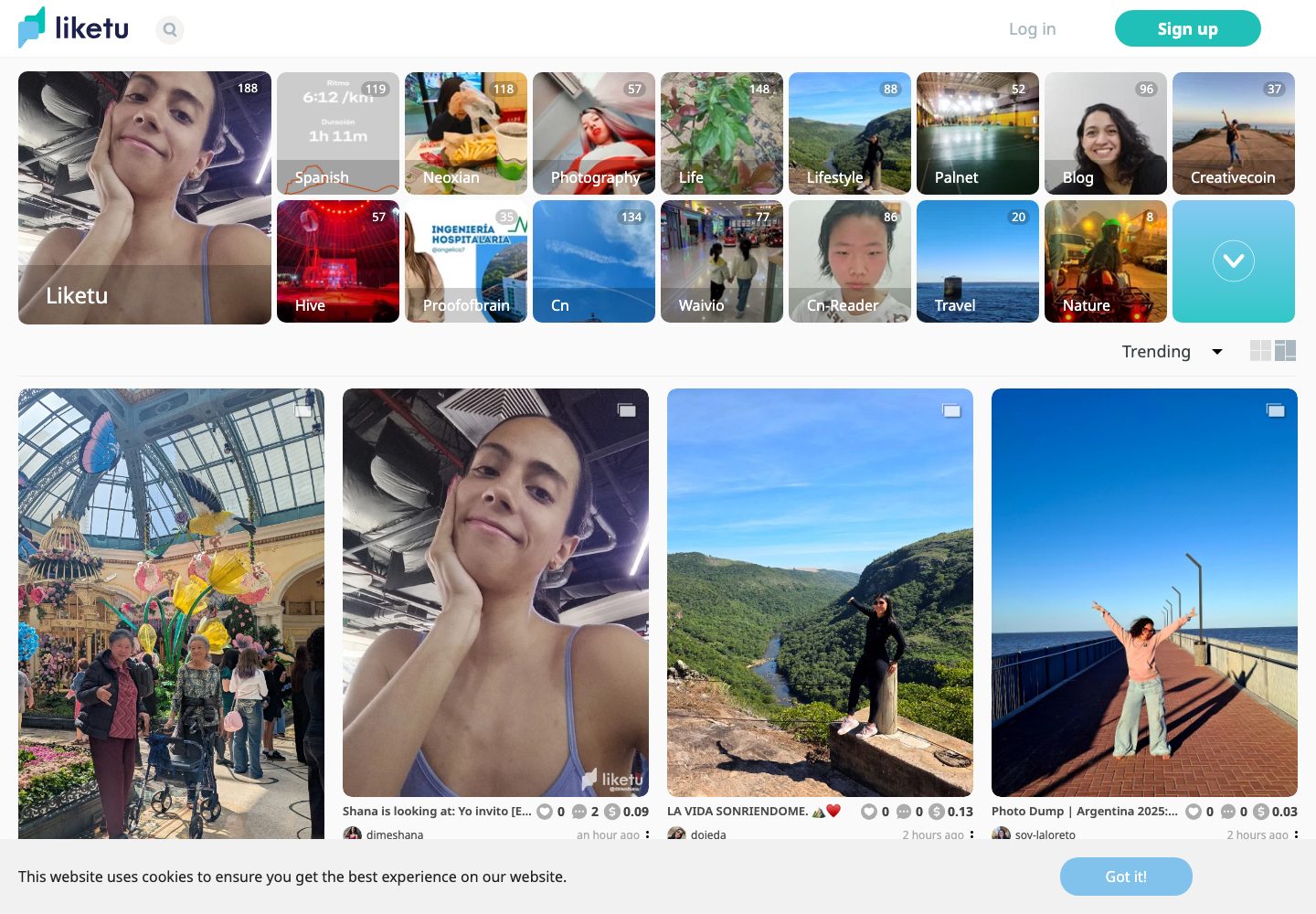
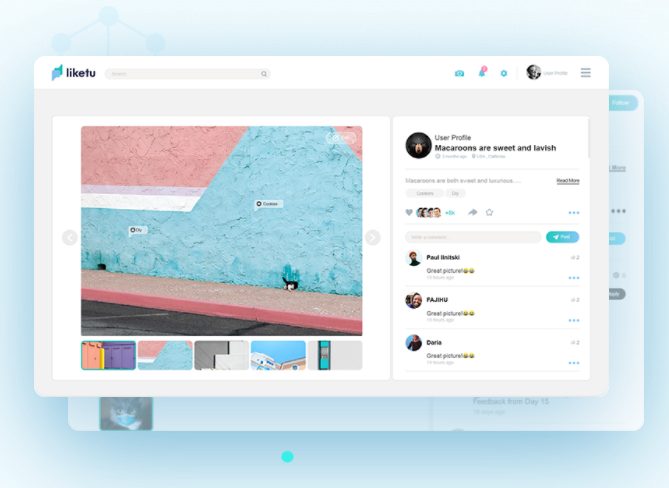
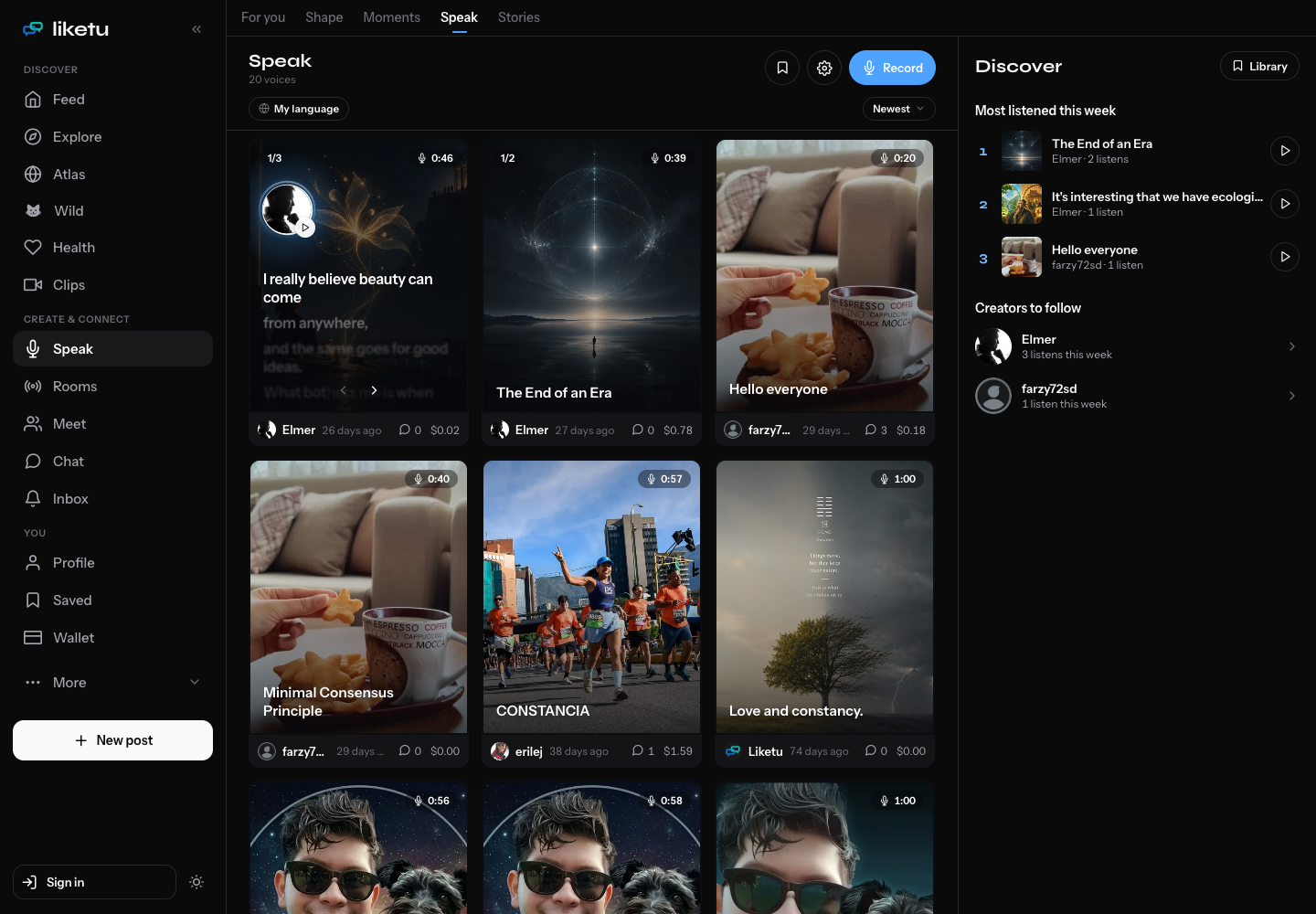
The announcements and product images below document Liketu's history from 2018. They provide context for the codebase and experience being offered to Hive.
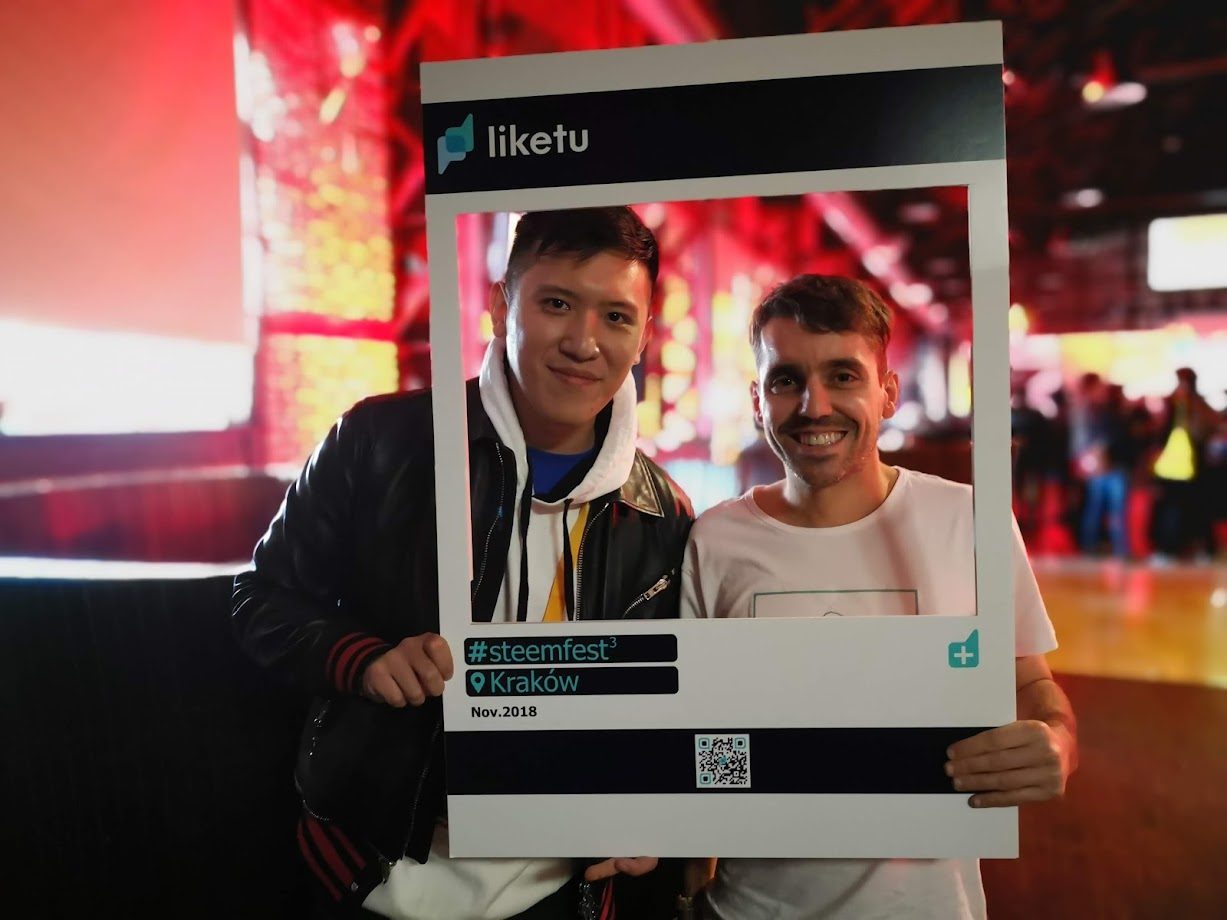
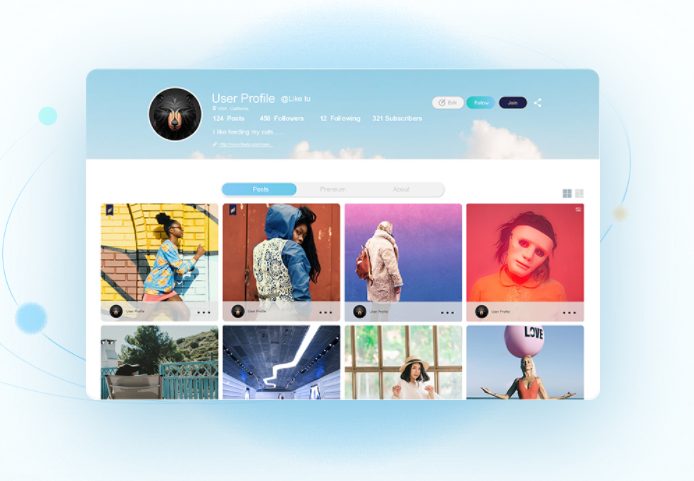
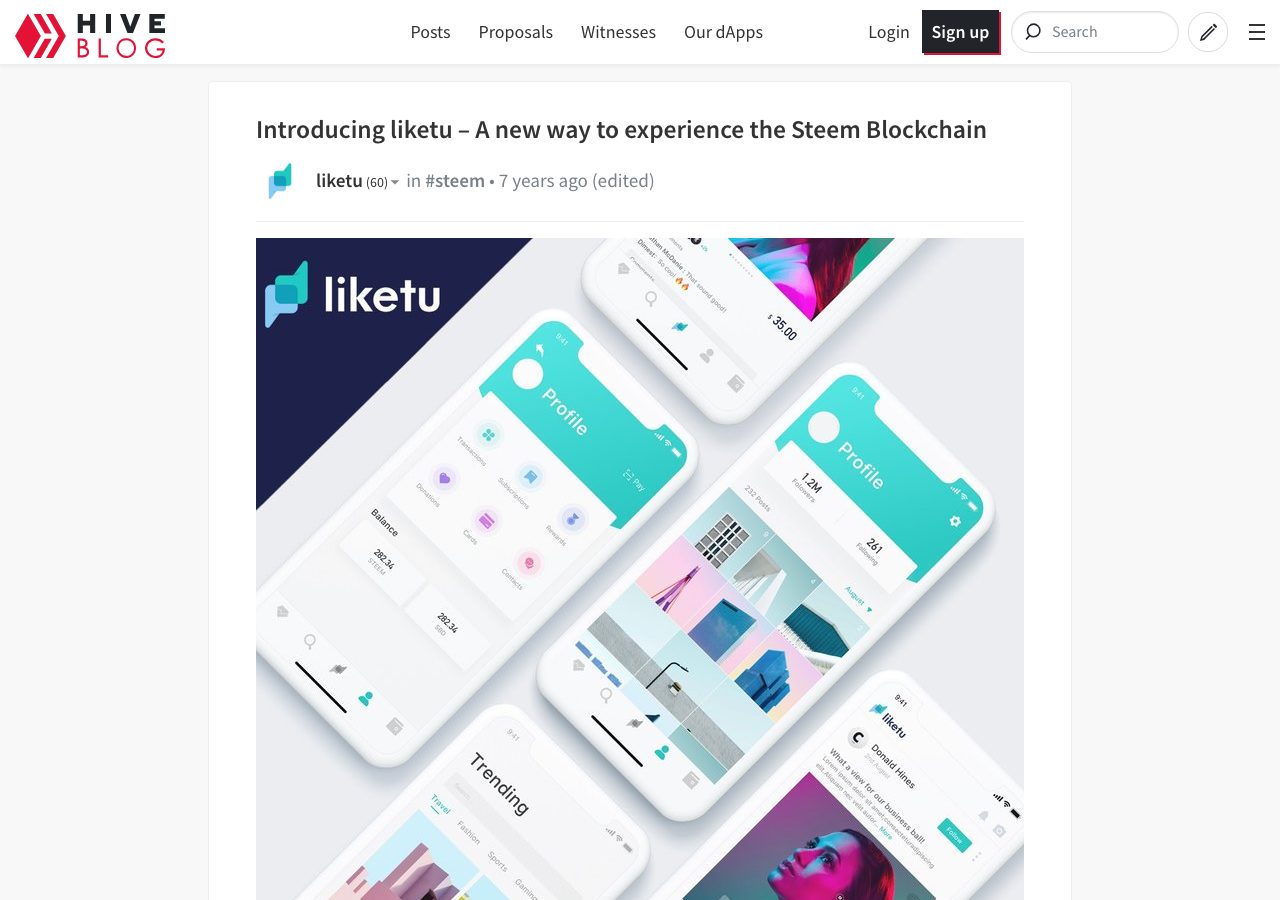
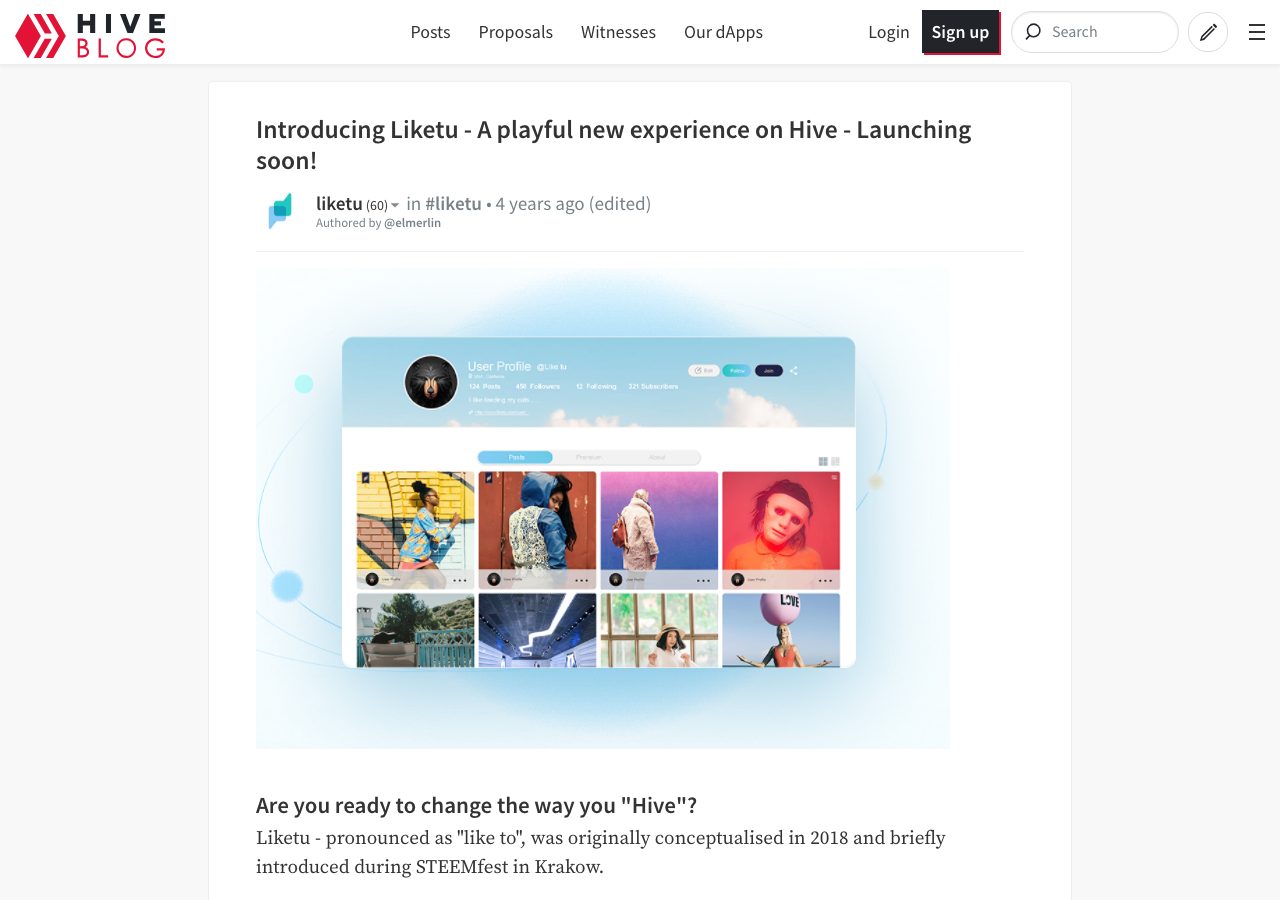
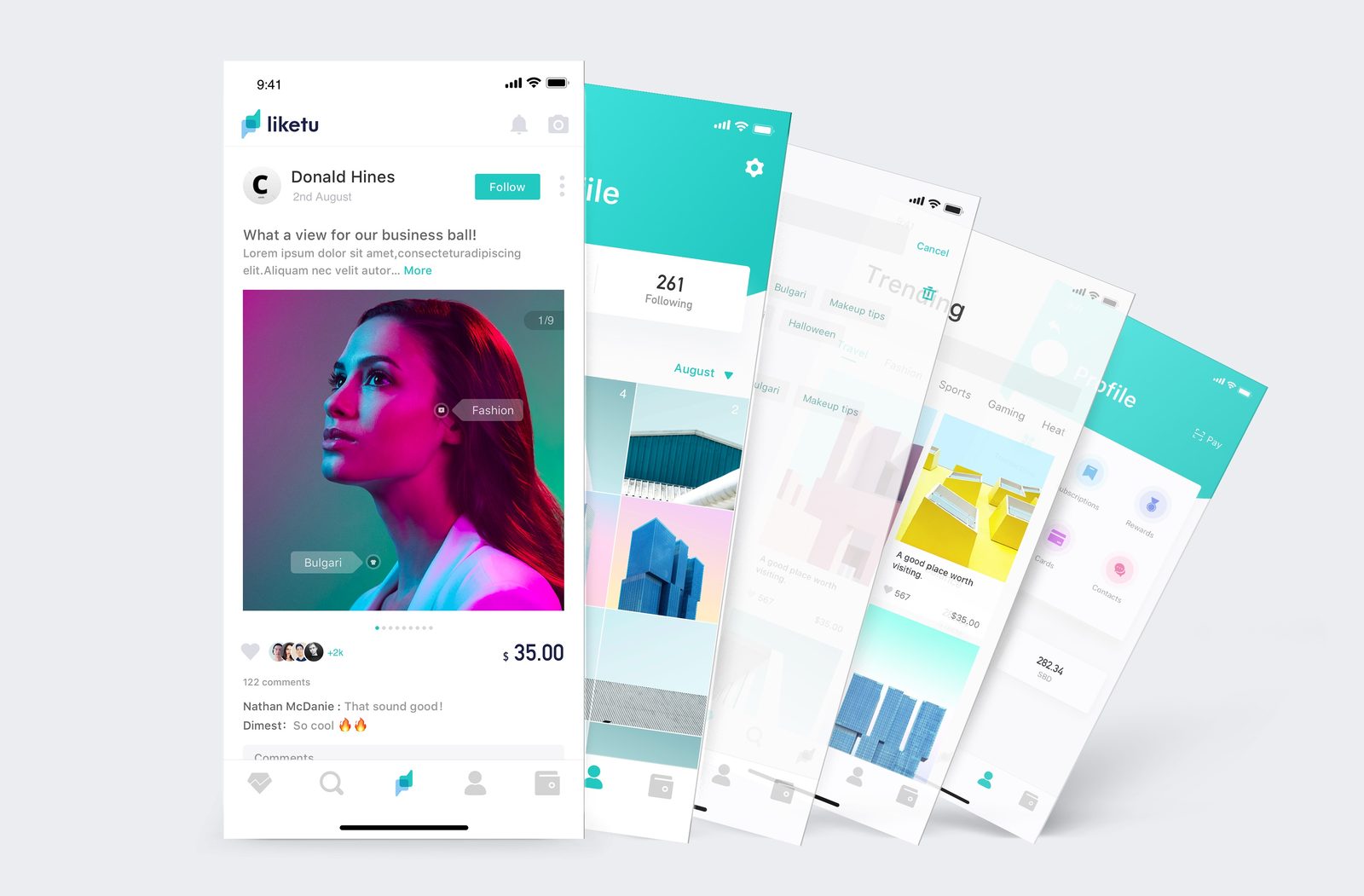
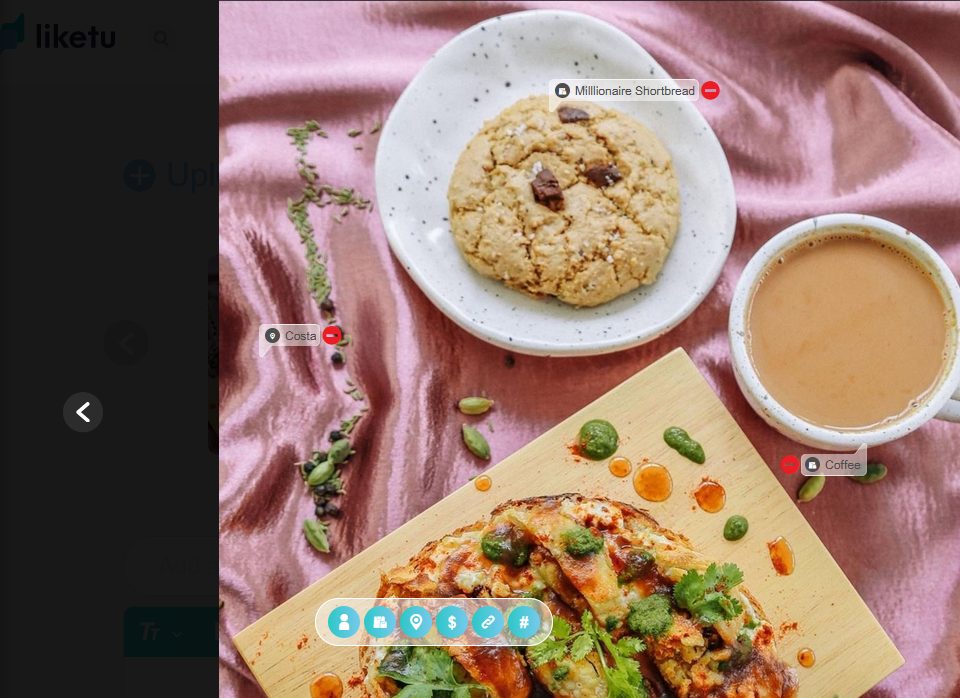
The original product was announced publicly in 2018 as a more natural, visual way to experience blockchain social content. It was presented at SteemFest Krakow that same year. When the community moved to Hive, Liketu moved with it and launched its Hive-era product direction in 2021.
Since then, the team has continued building, funding, operating, and rebuilding the platform without prior DHF proposal funding.
2018: The Original Thesis
The first Liketu announcement already focused on image-led discovery, a friendlier social experience, and an interface that felt closer to mainstream visual platforms than to a blockchain explorer.
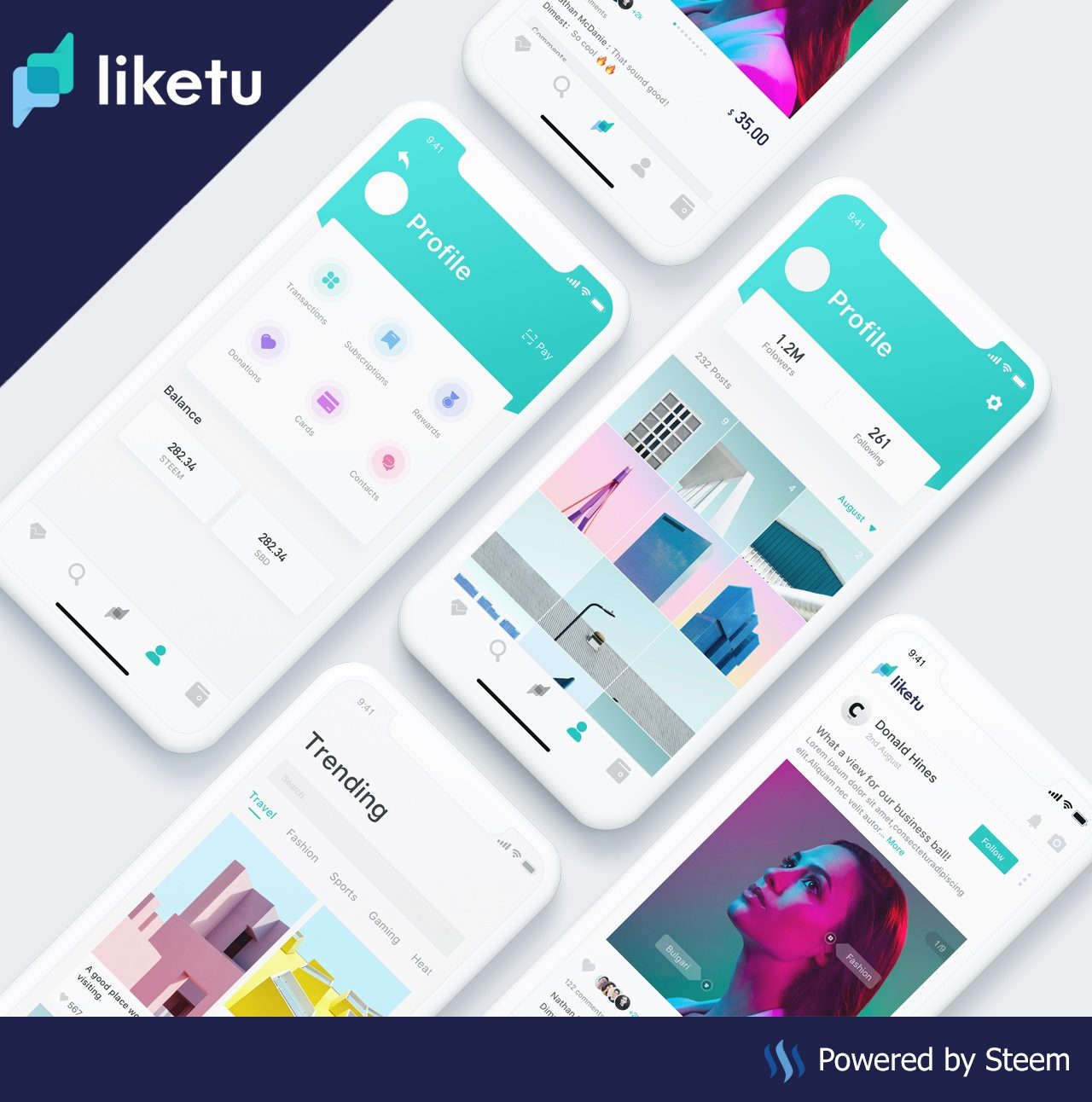
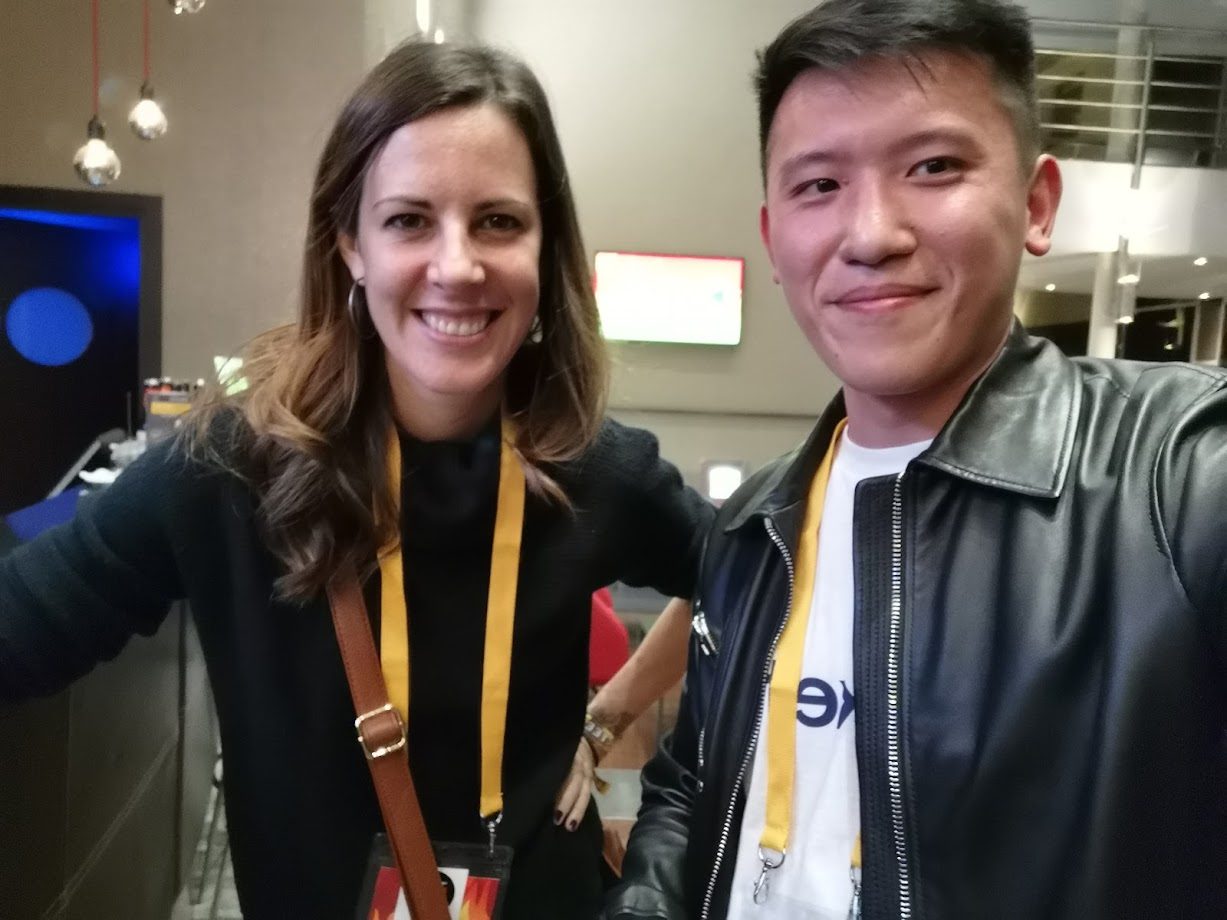
2018: Liketu In Krakow
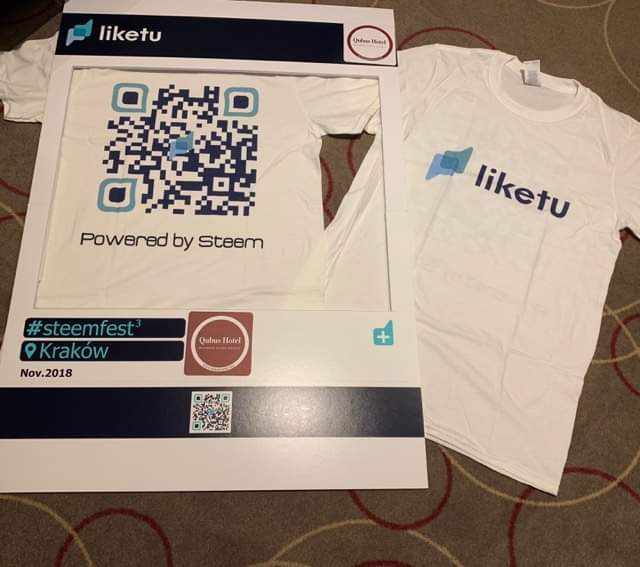
Liketu was shown publicly at SteemFest Krakow in November 2018. The project was already being discussed, demonstrated, and carried into the community years before this request.
2021: Launching On Hive
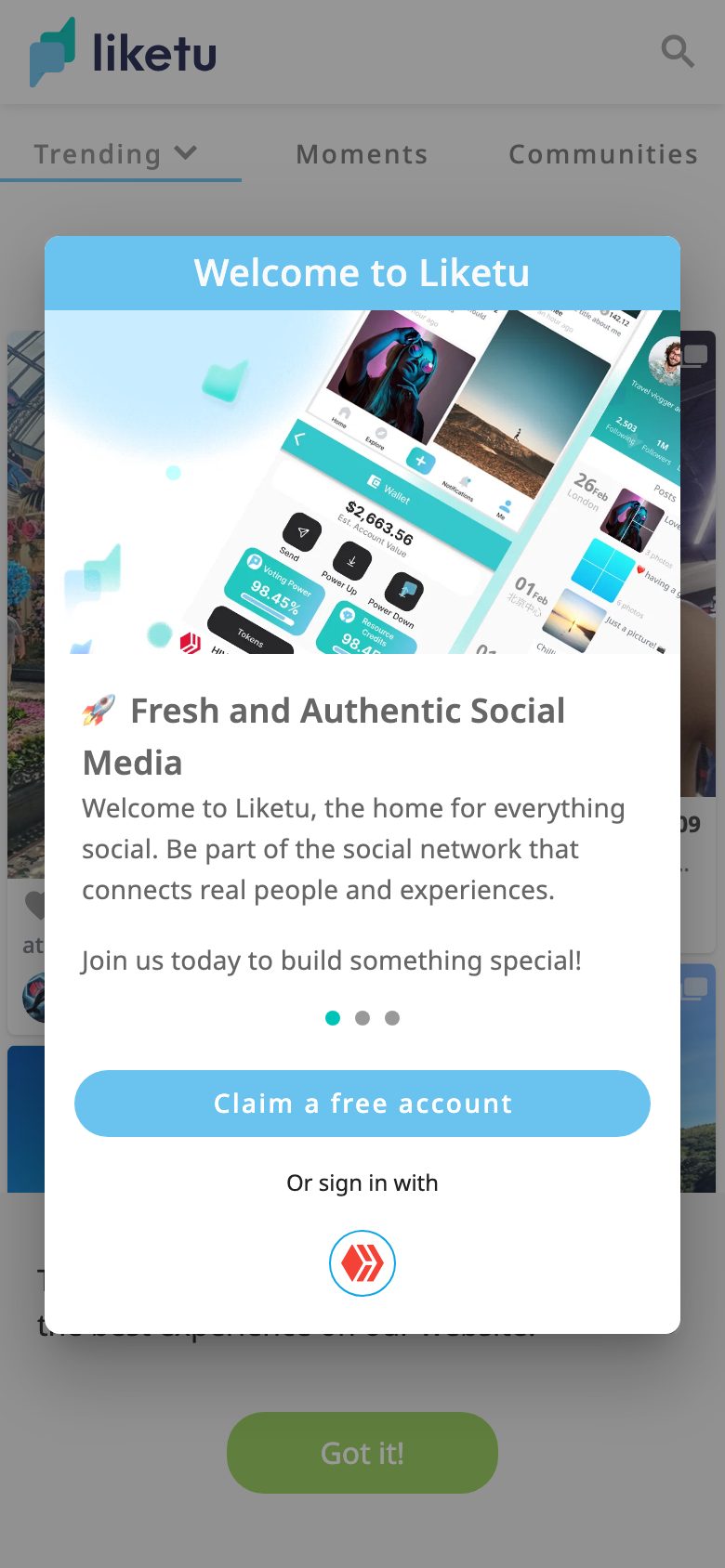
The 2021 launch announcement brought the same visual-social thesis to Hive with a playful mobile identity and a product designed around creators rather than blockchain complexity.
2026: A Much Larger Product
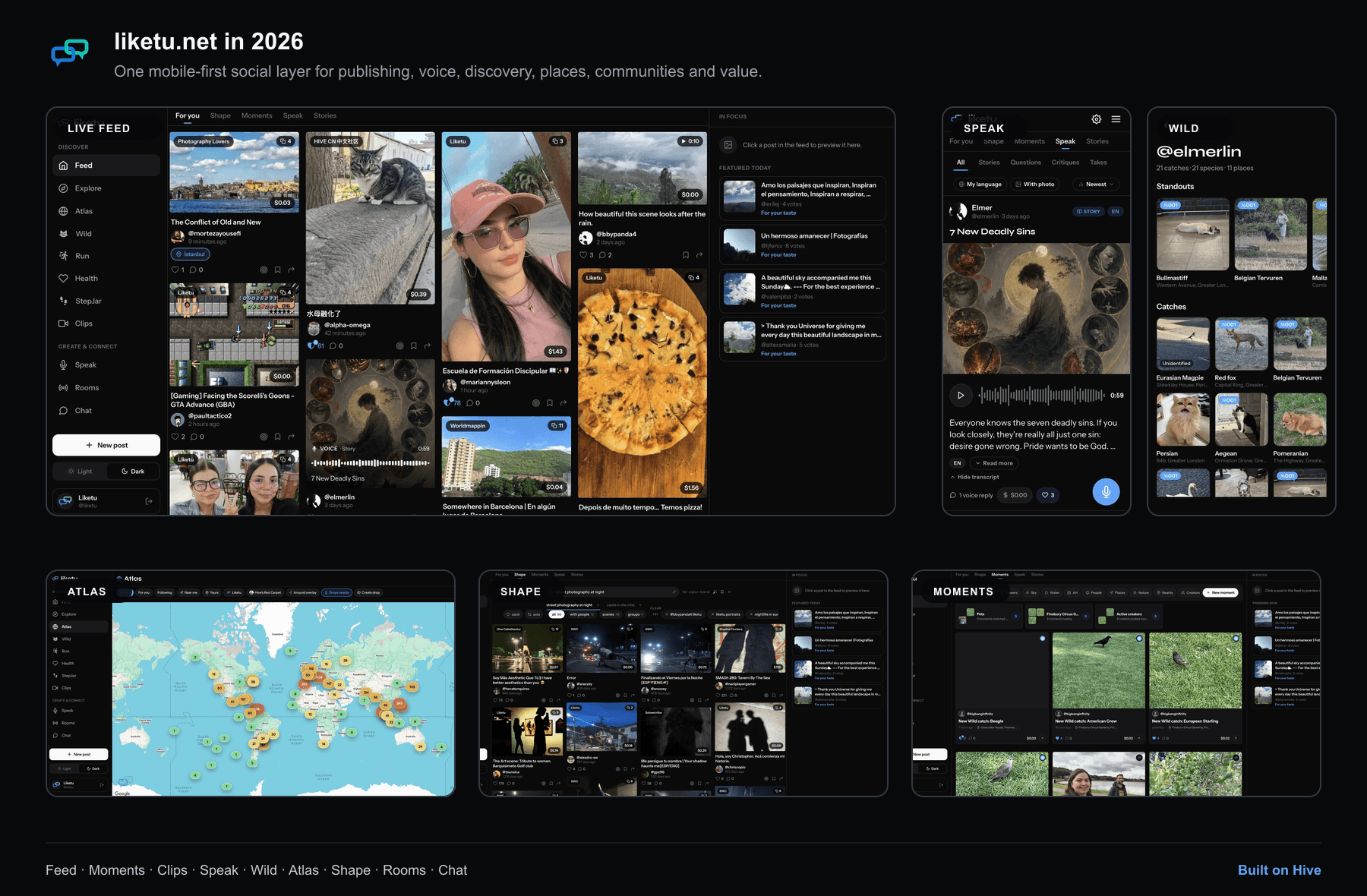
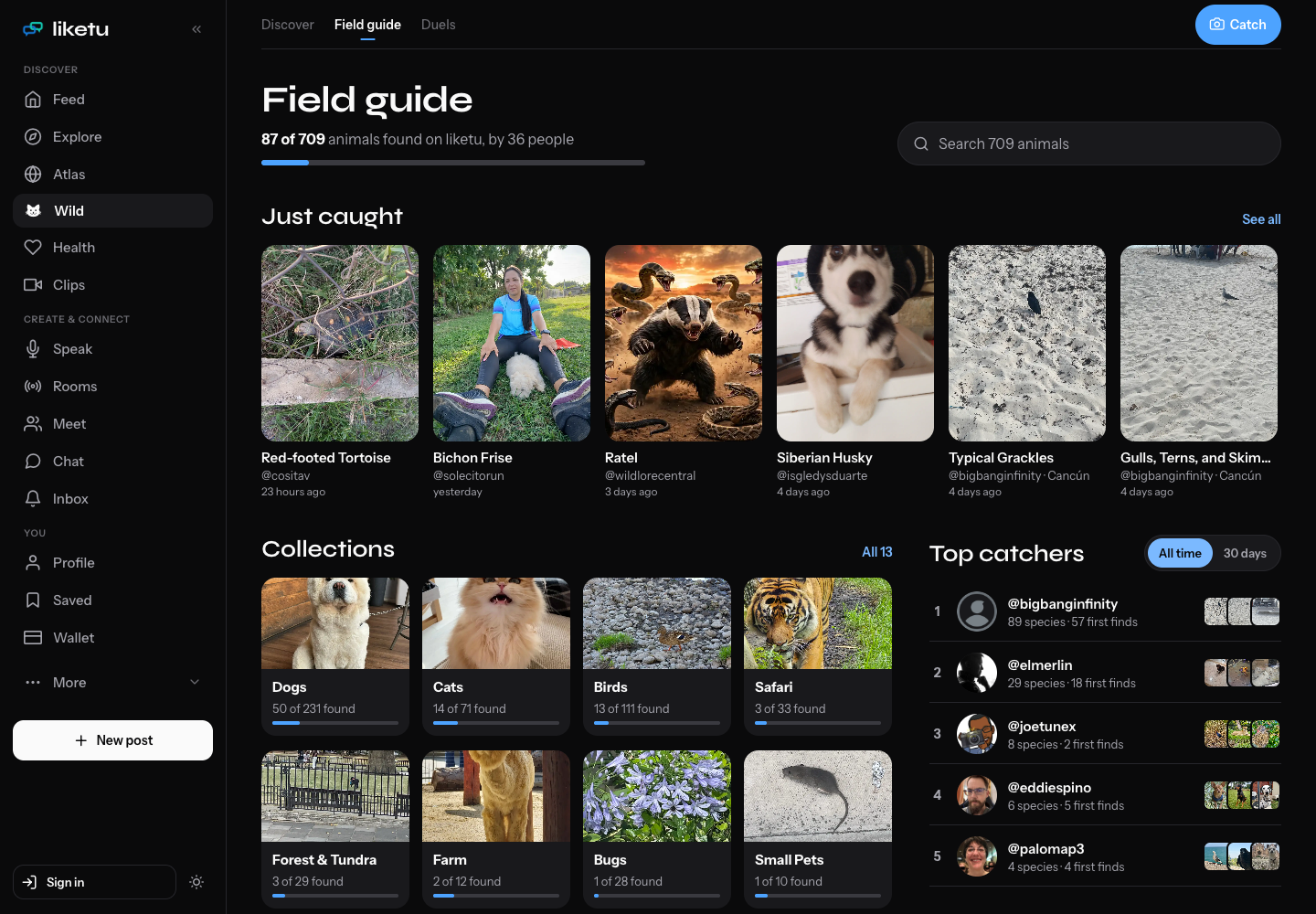
The July 2026 product snapshot combines social publishing, Moments, Clips, voice, live rooms, direct messaging, Red Packets, Wild collections, Atlas places, Shape search, wallet, market, analytics, growth systems, and native delivery in one cross-platform codebase. Development continued after that snapshot: October brought redesigned Wild, Atlas, and Speak experiences, Fitbook and its use of Liketu Credits, and expanded Health and Run features. Fresh captures of Wild, Atlas, and Speak appear in the product sections below.
Community Was Part Of The Product
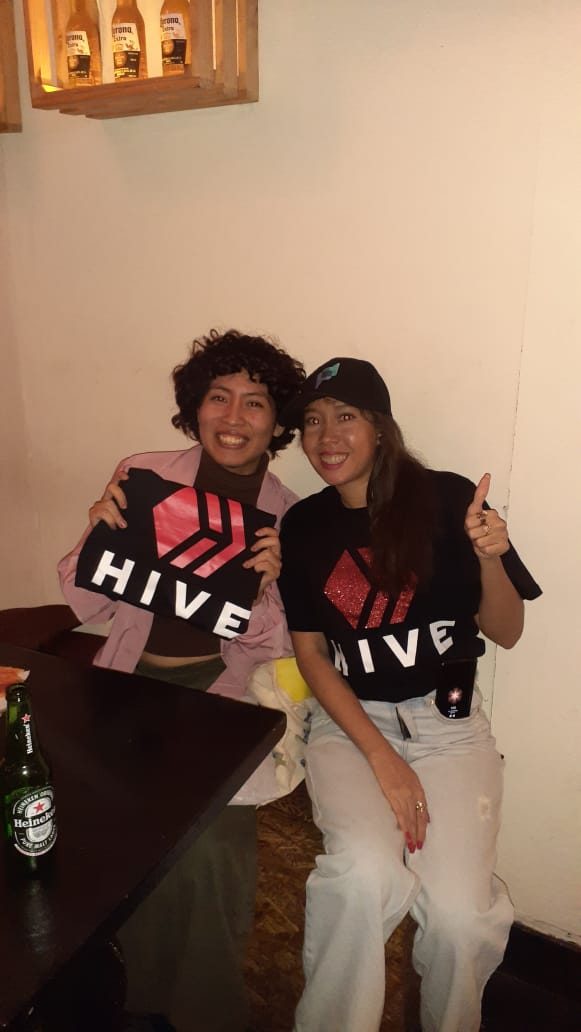
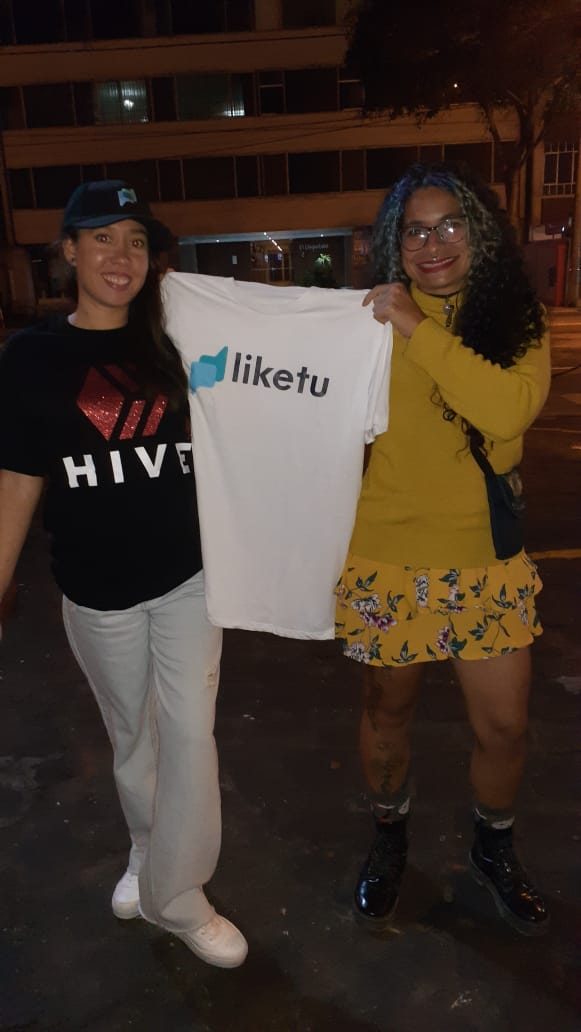
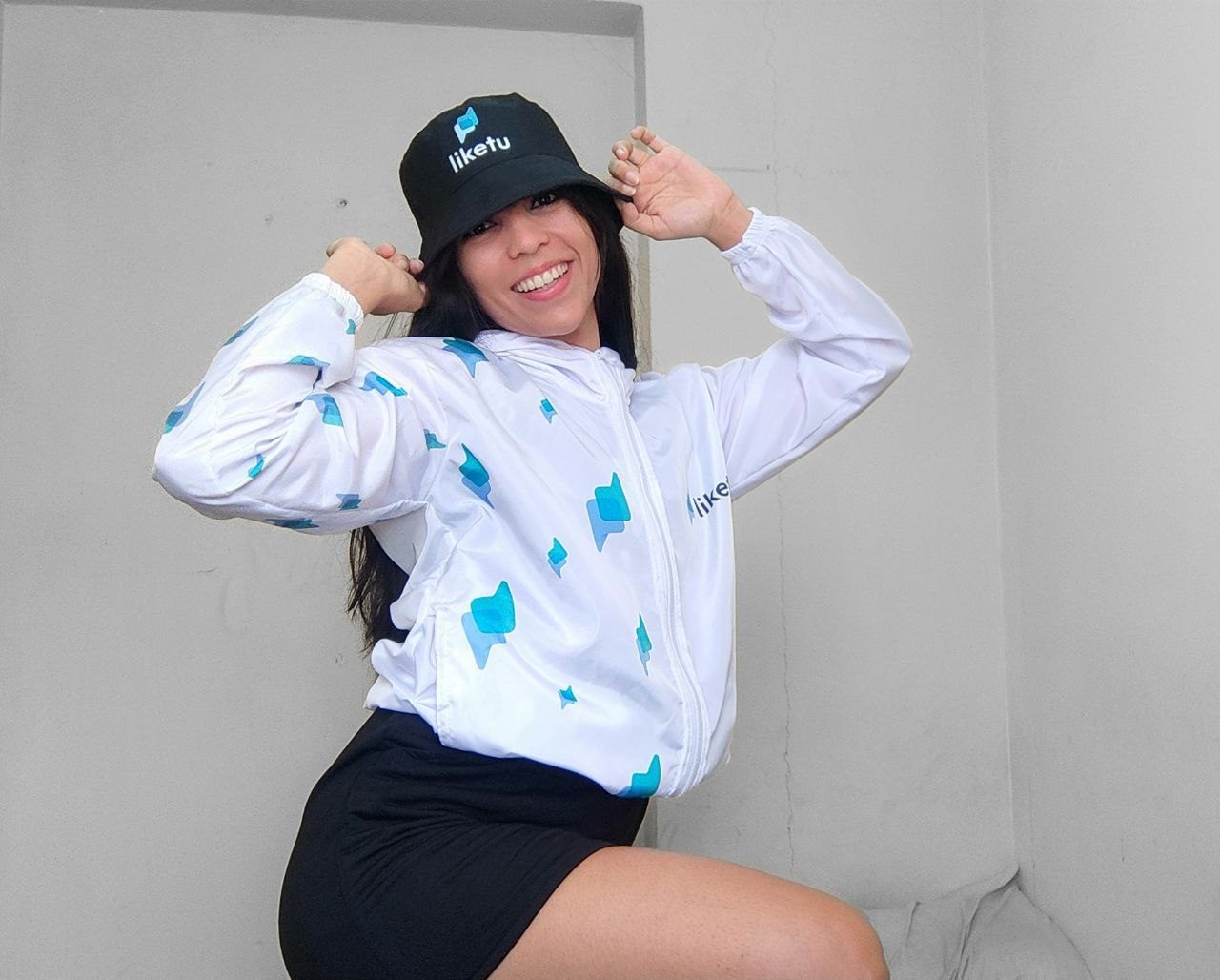
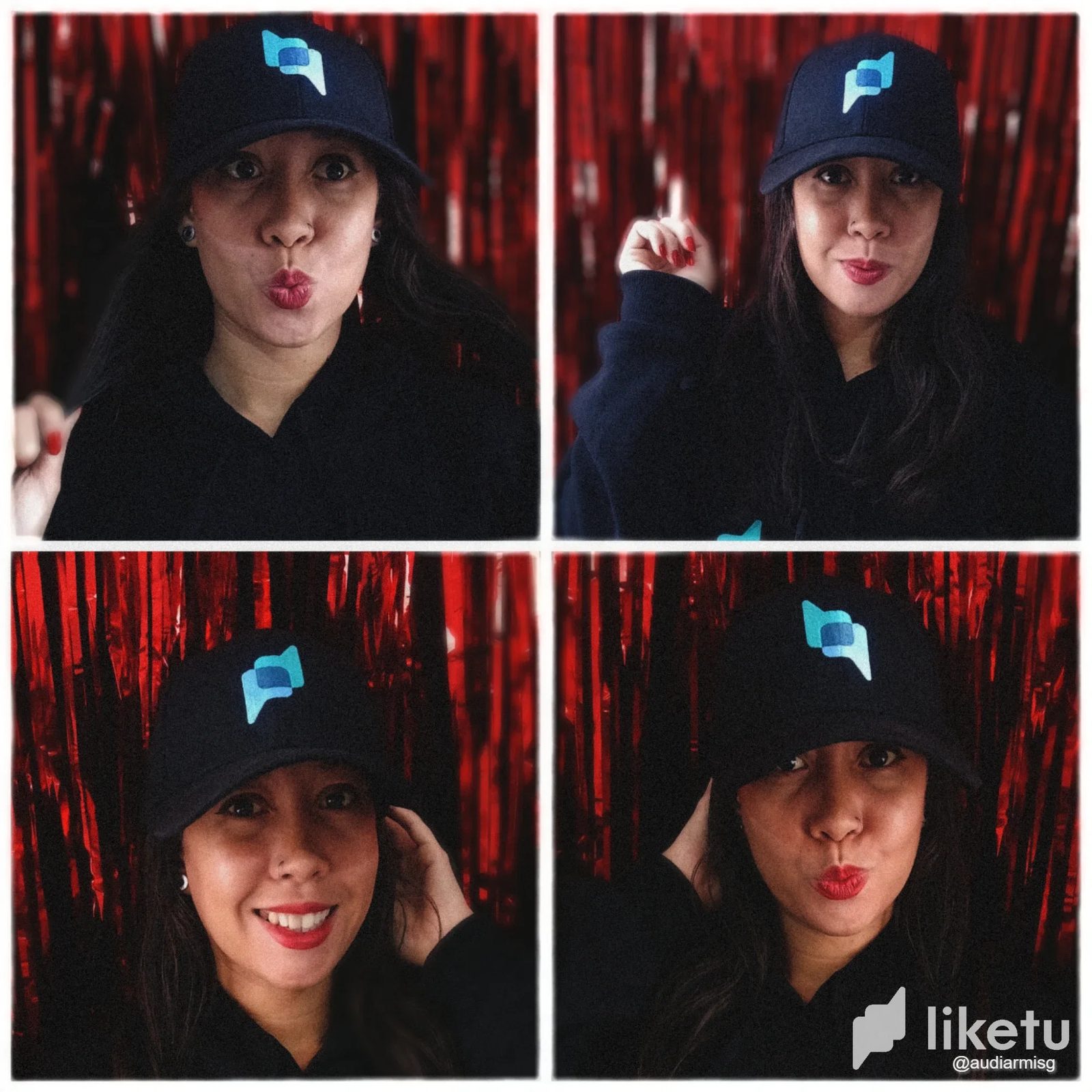
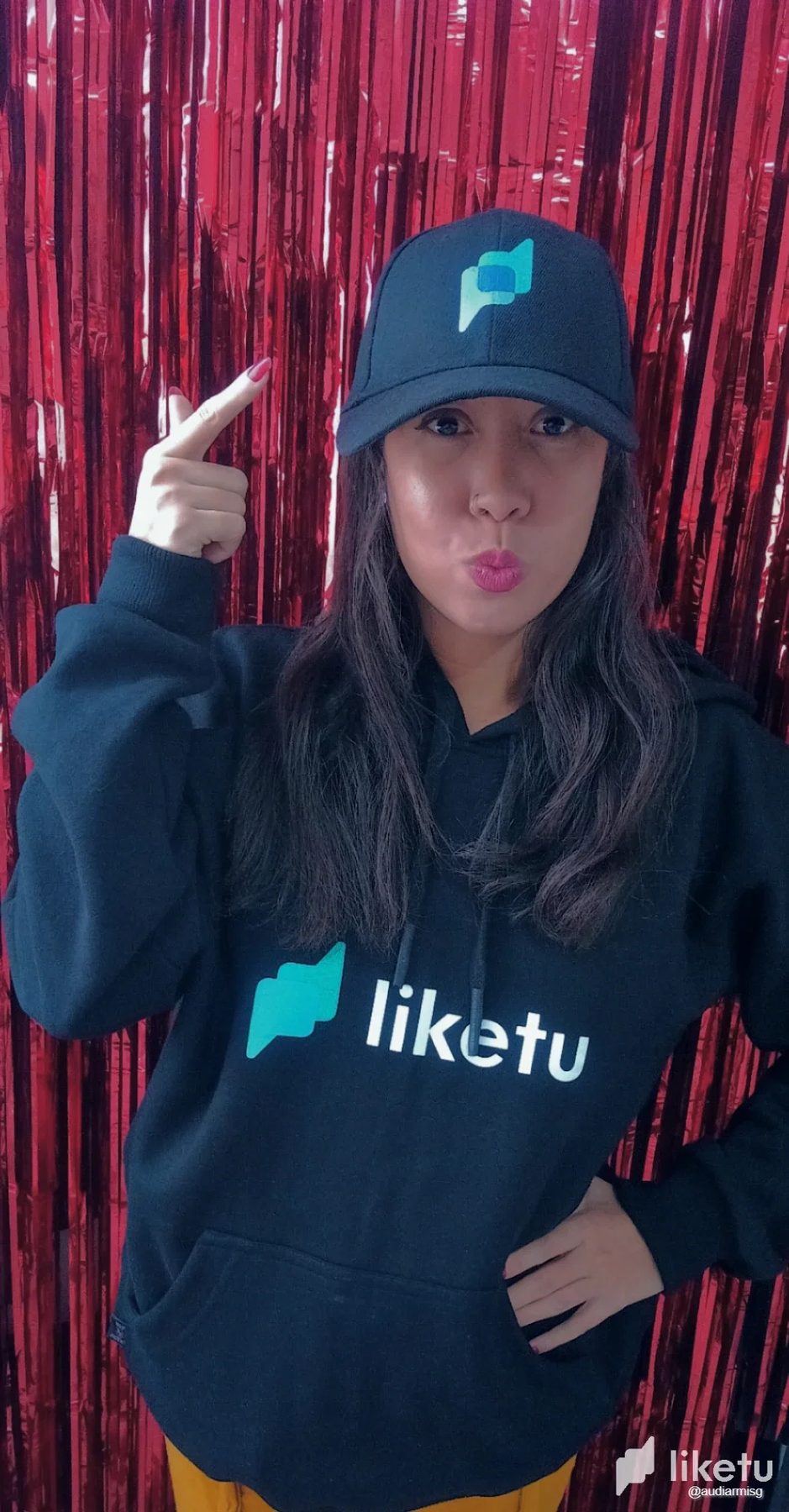
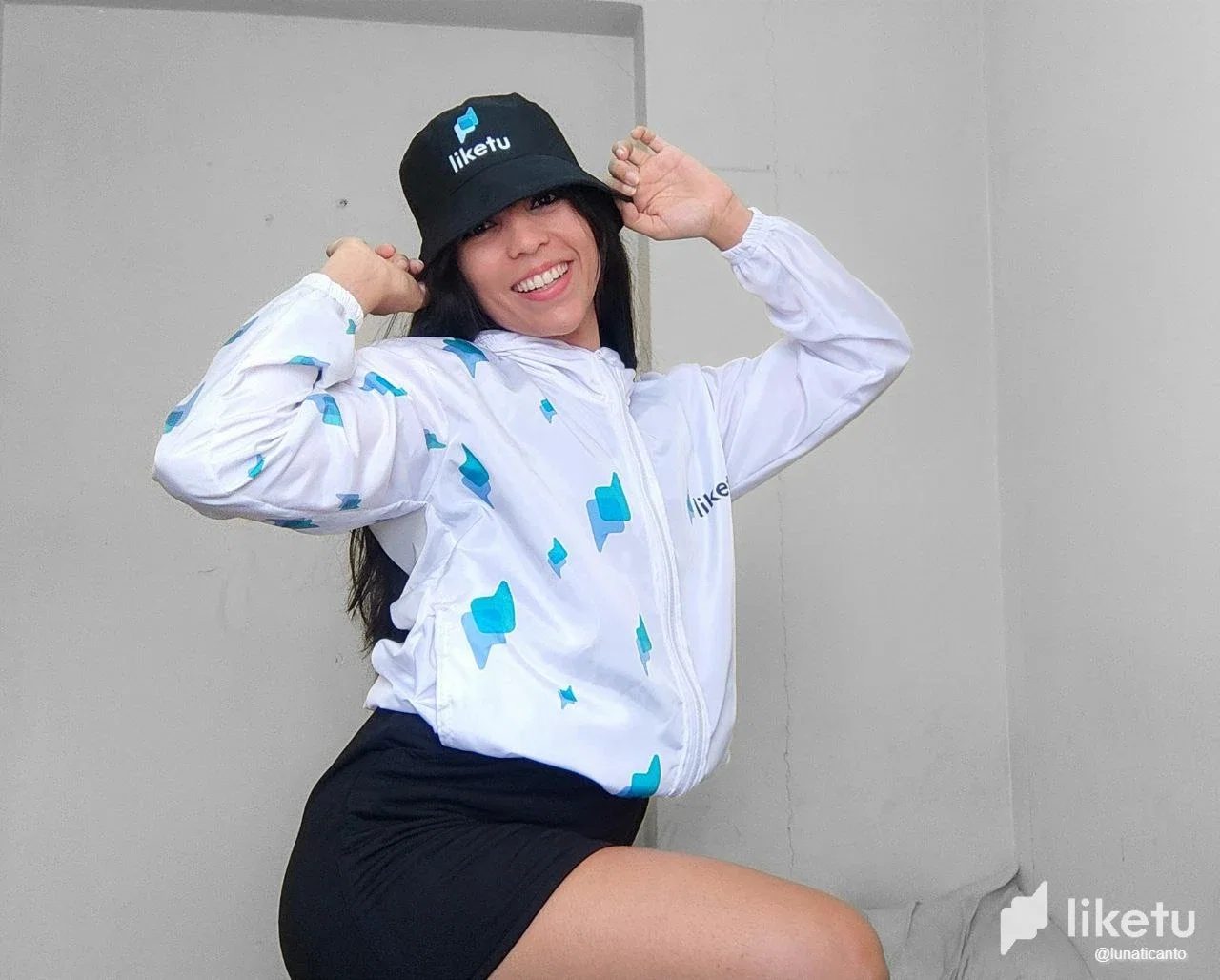
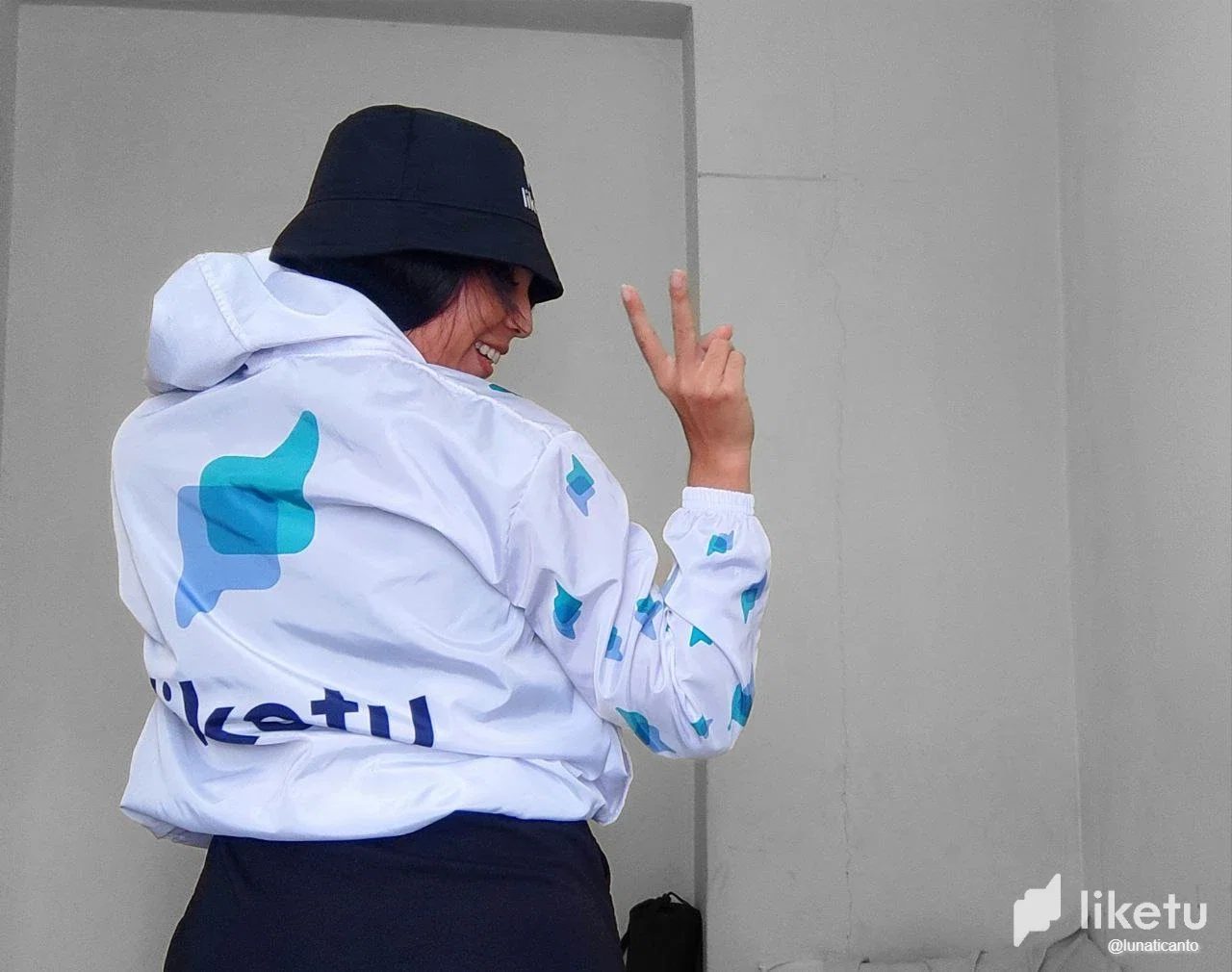
Liketu's contribution has never been limited to code. The project has funded creator activation, merch, events, challenges, sponsorships, and offline visibility that promoted both Liketu and Hive.
The examples below show creator-led merch, community events, and participation around Liketu and Hive. They document past community work; they are not a measure of current adoption.
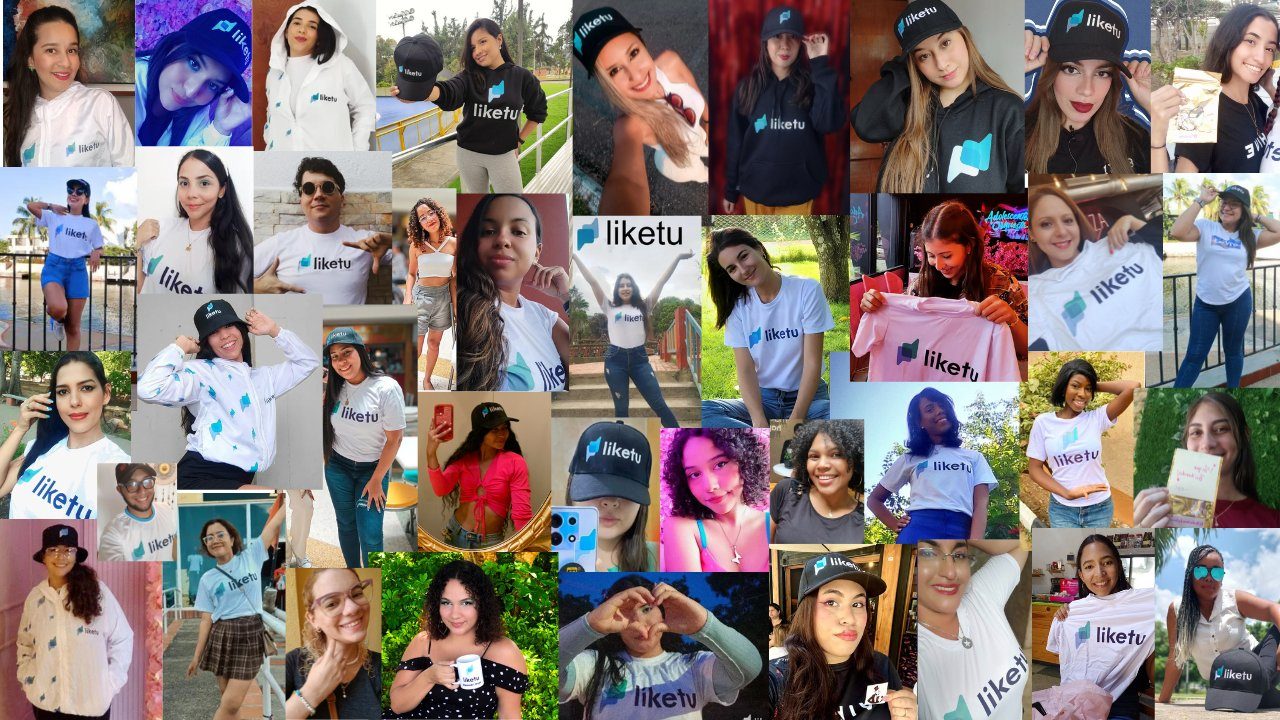
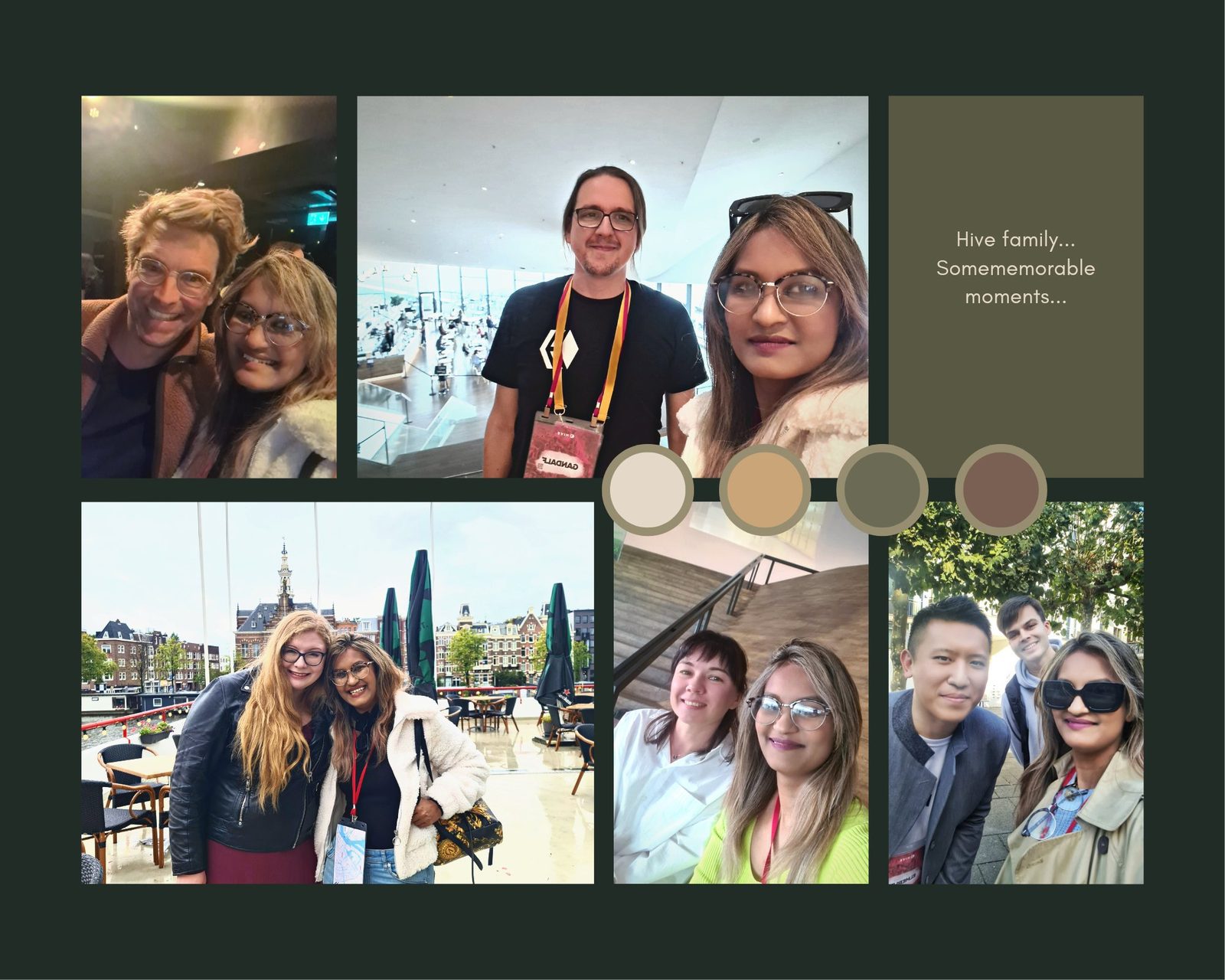
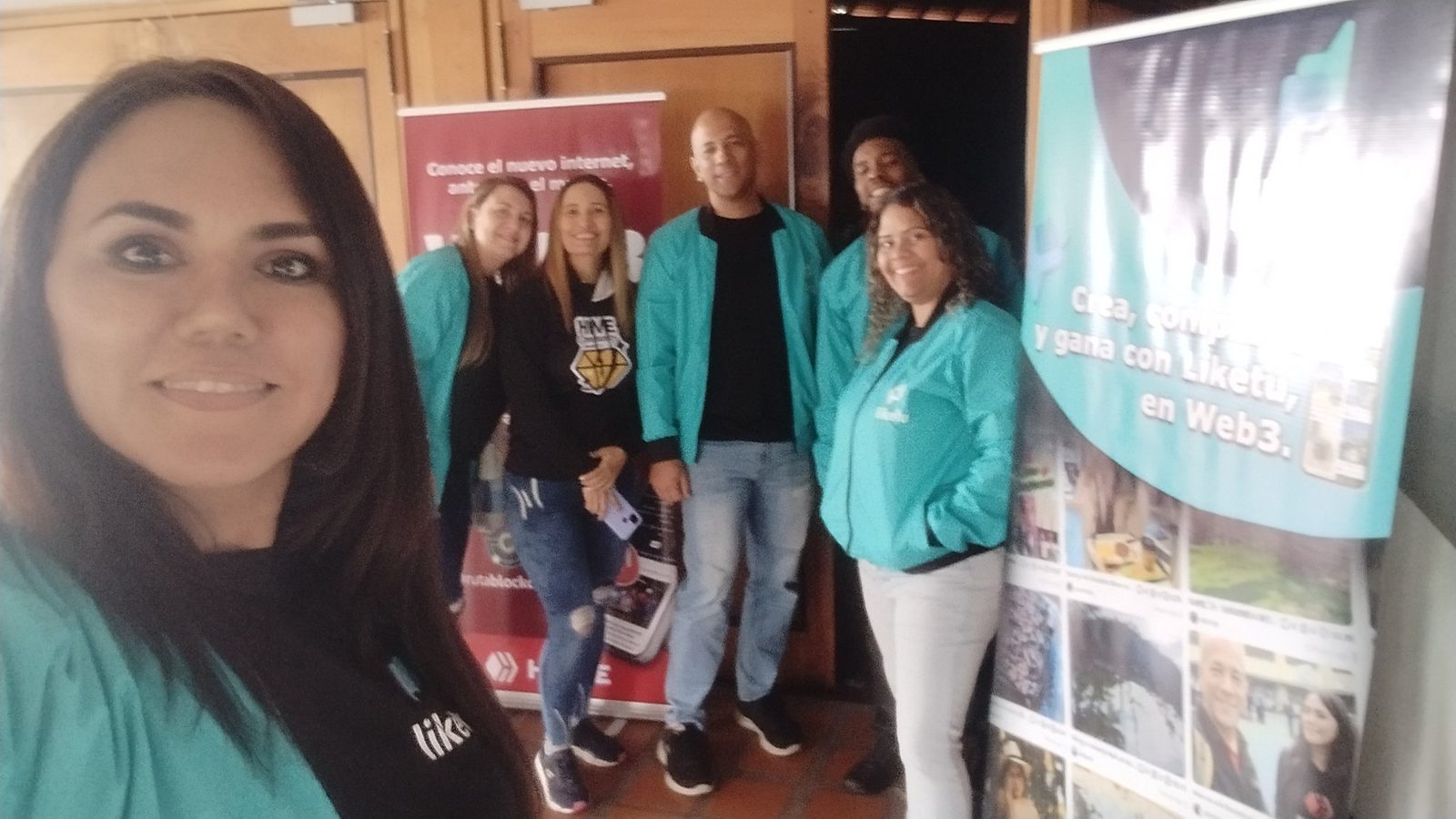
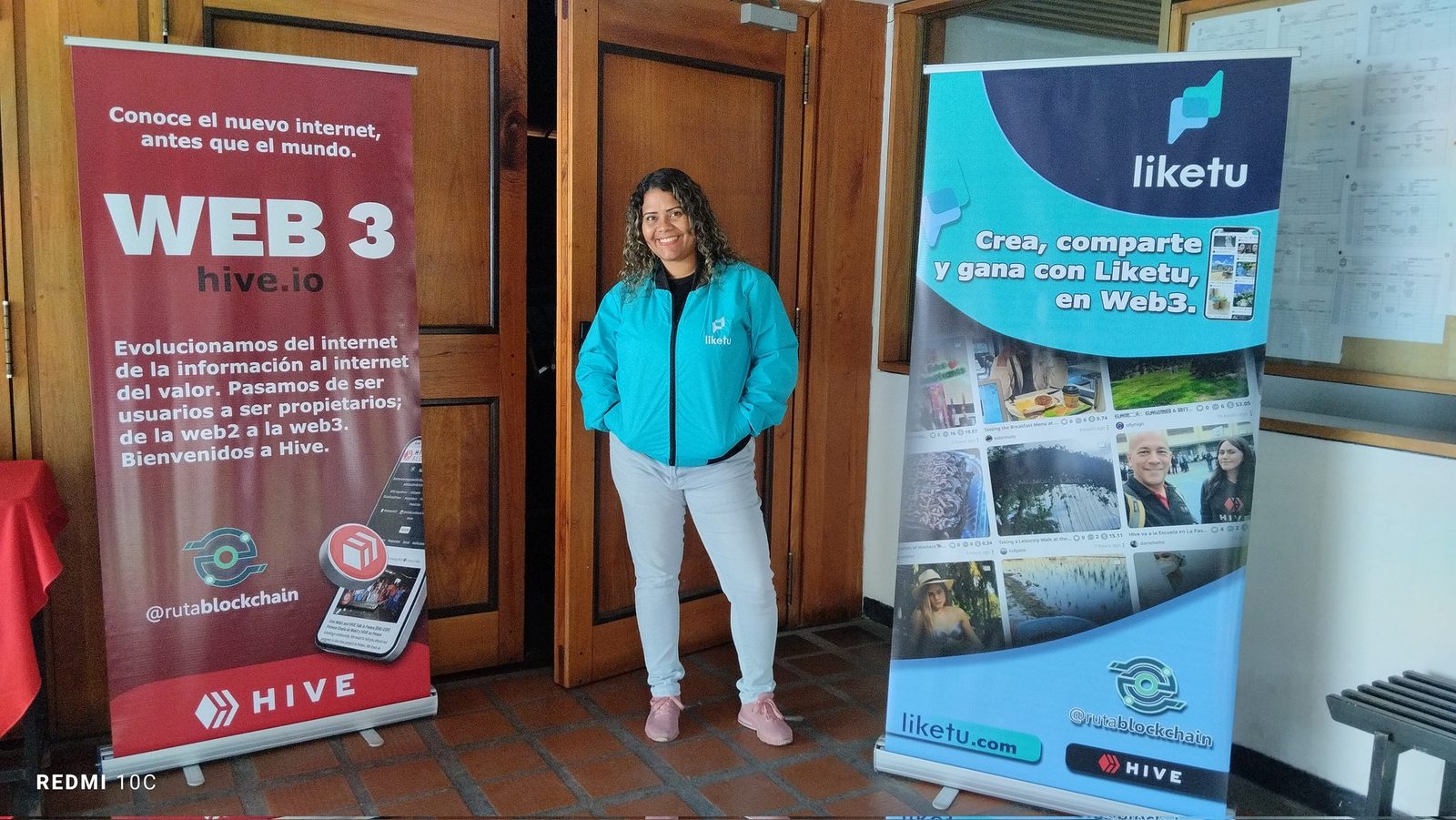
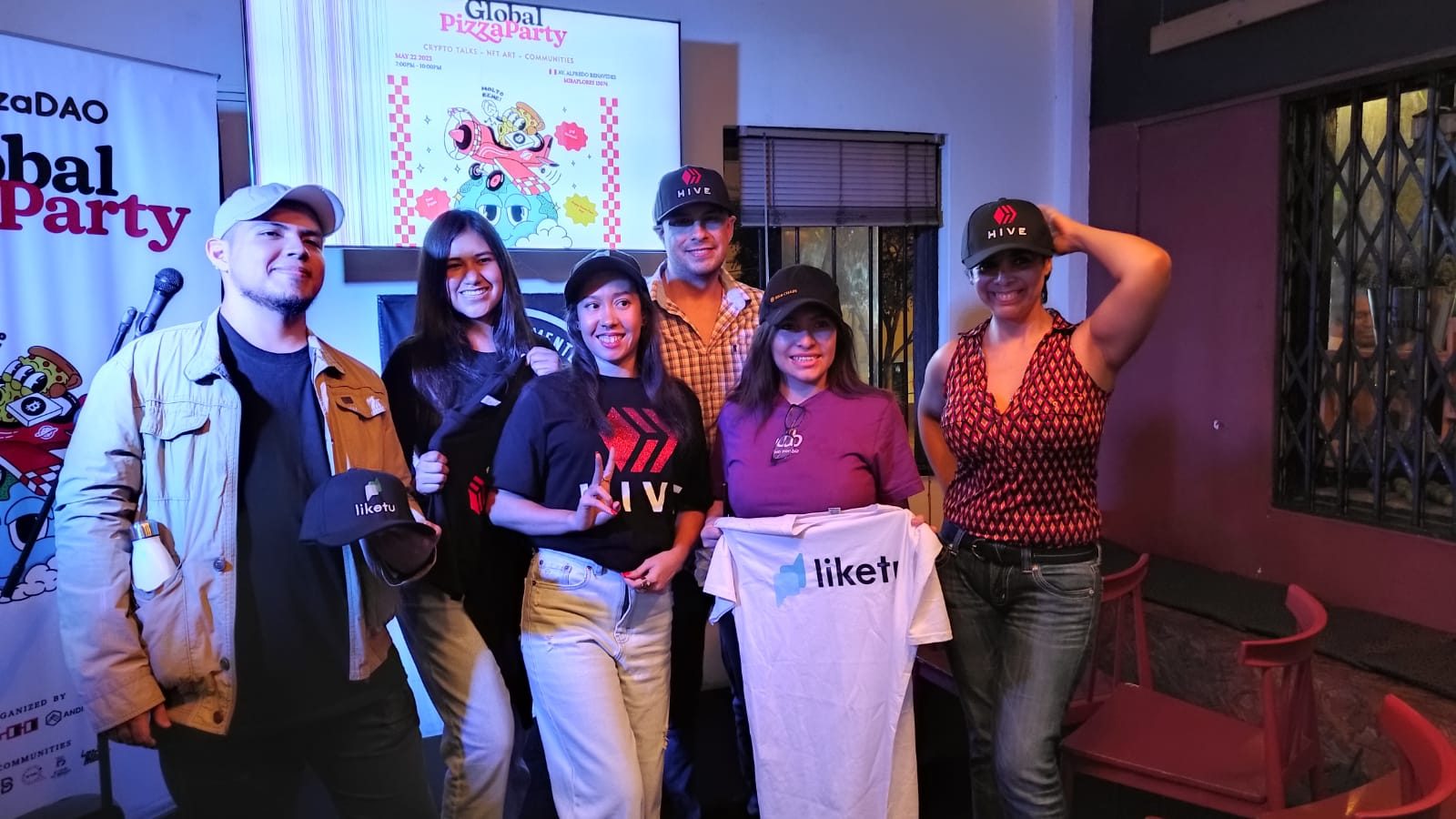
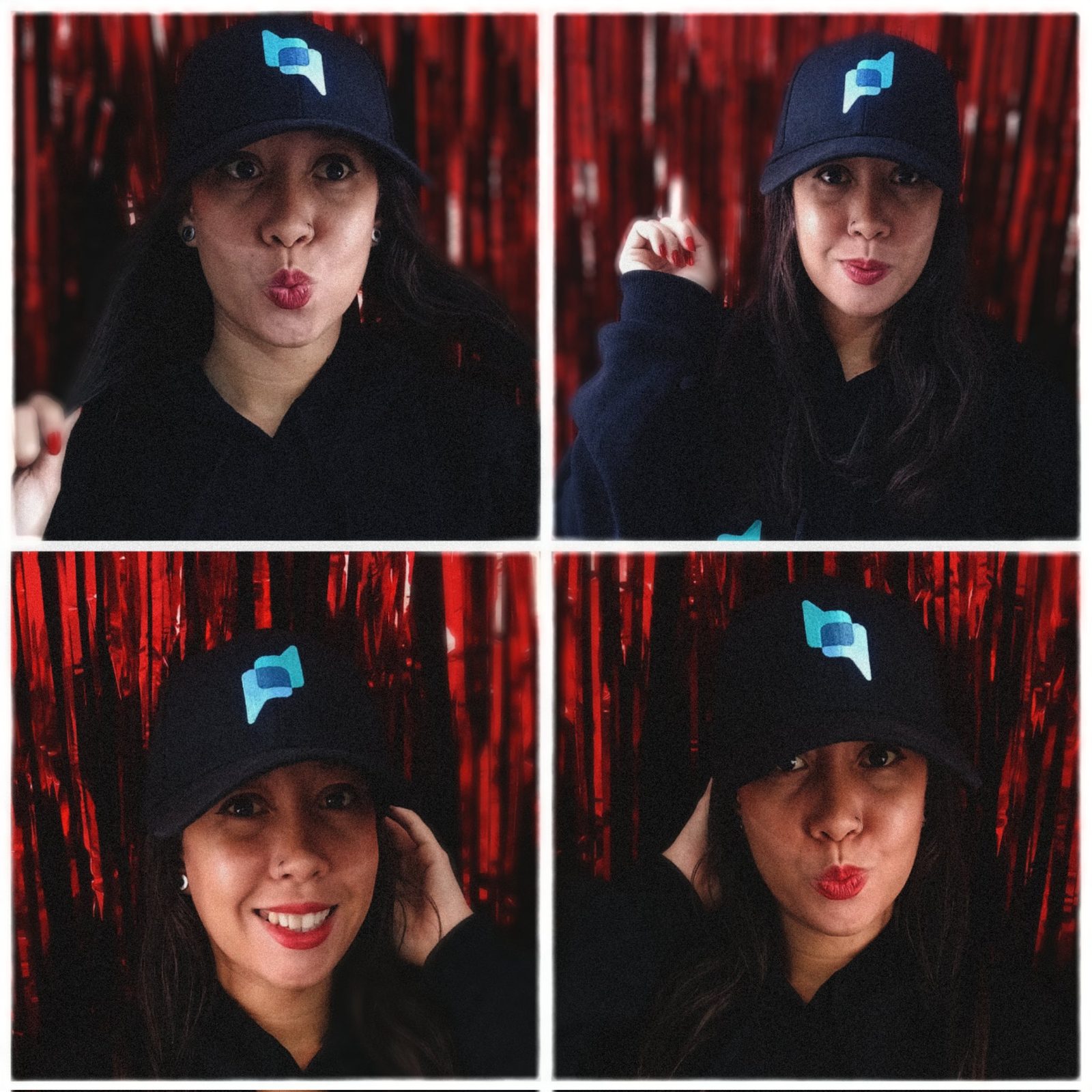

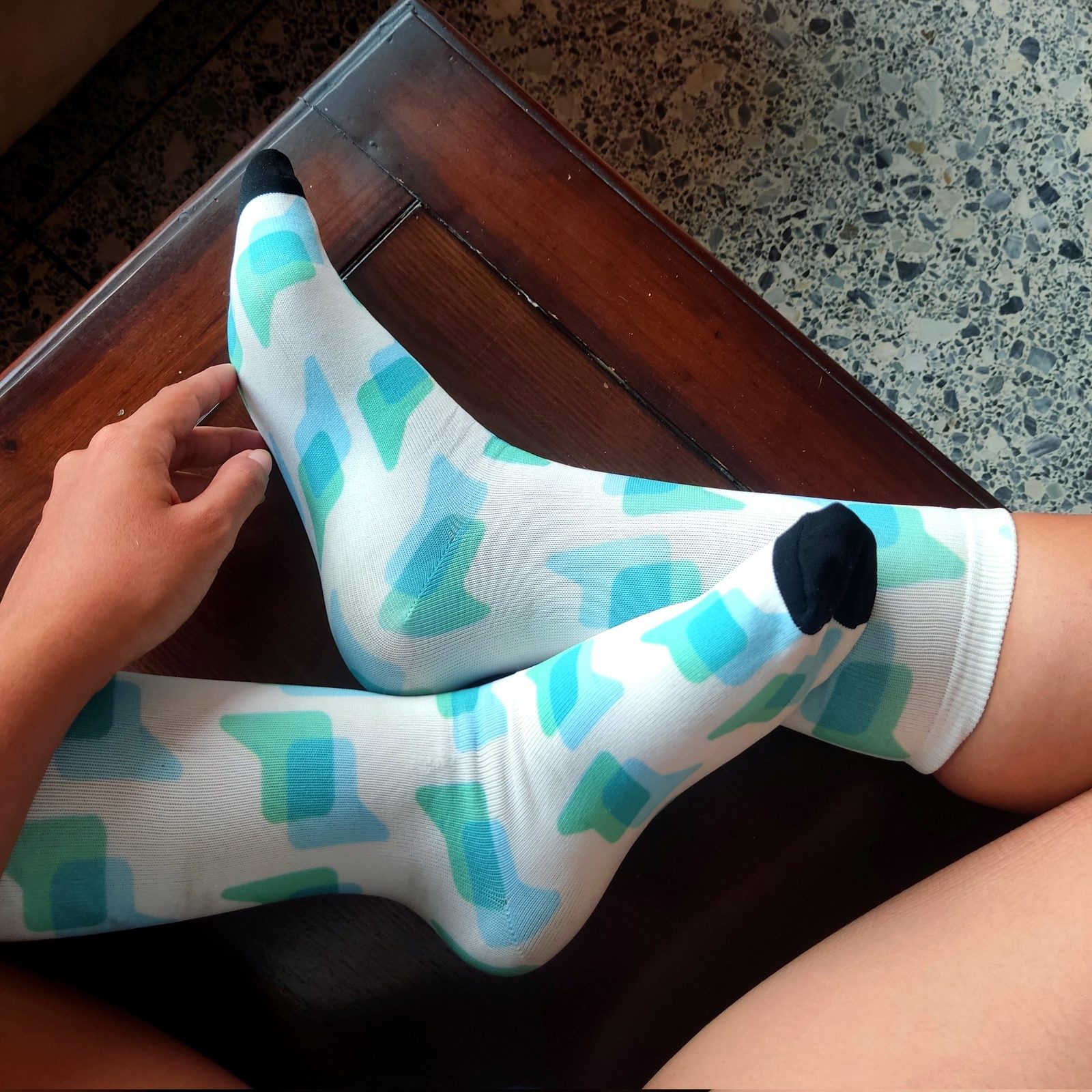
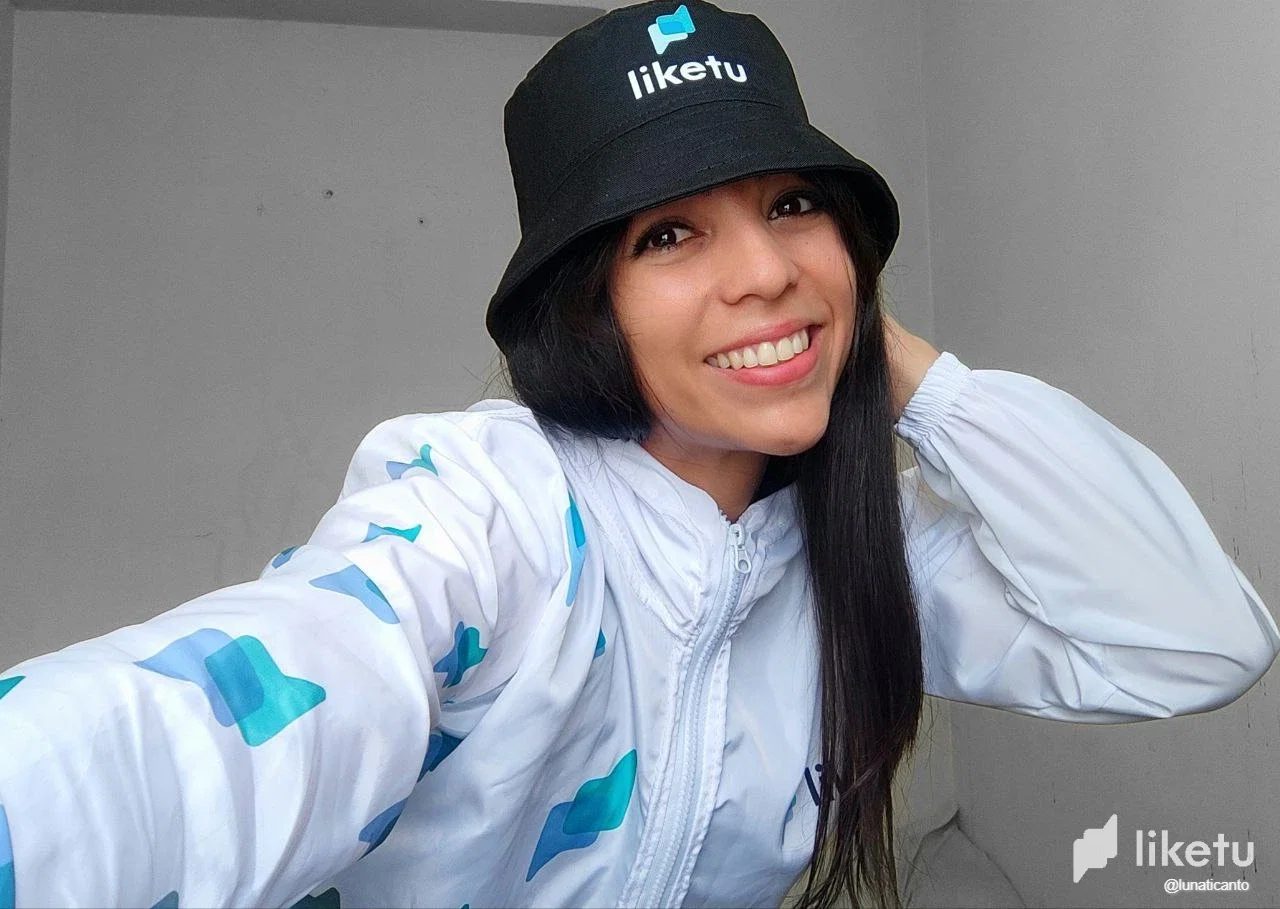
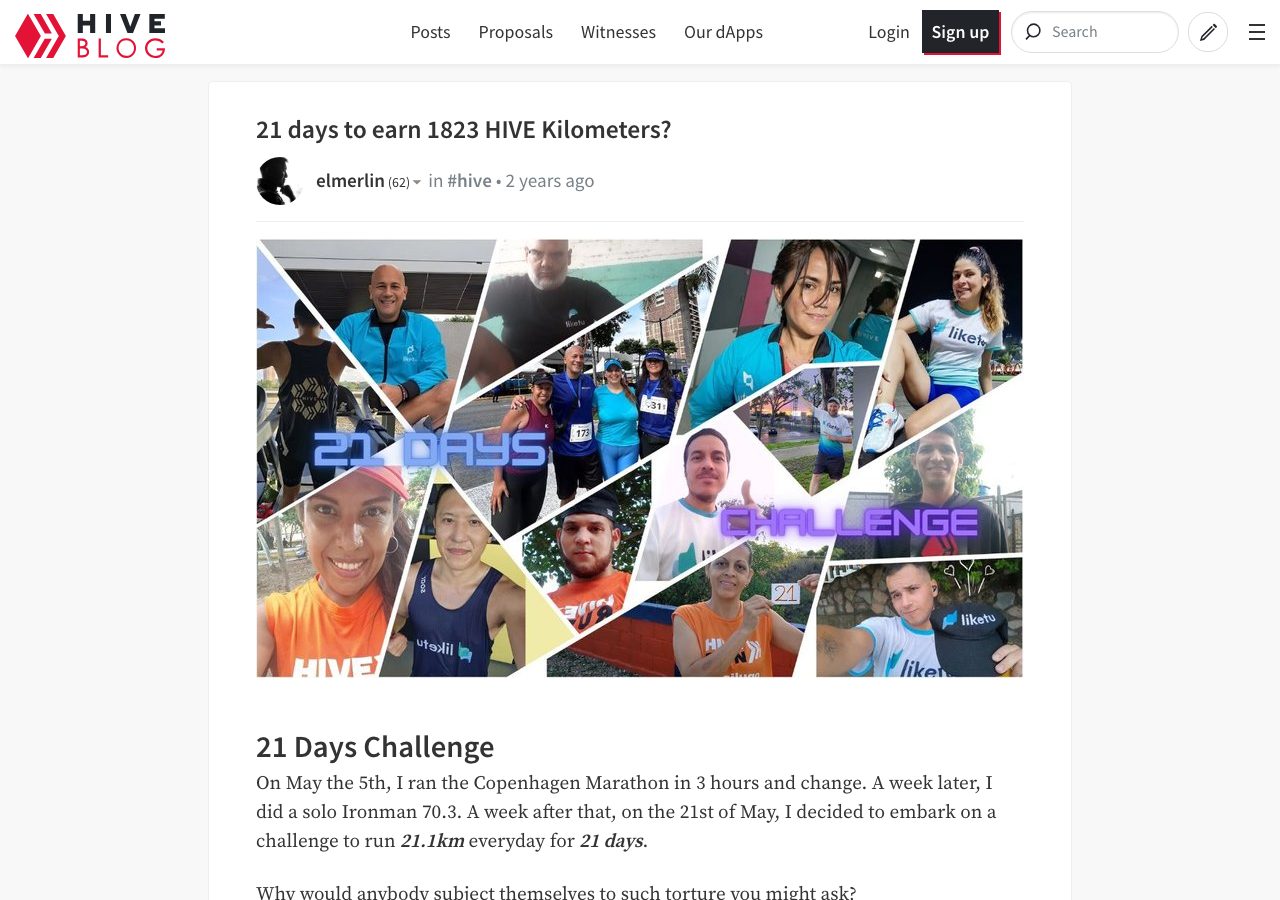
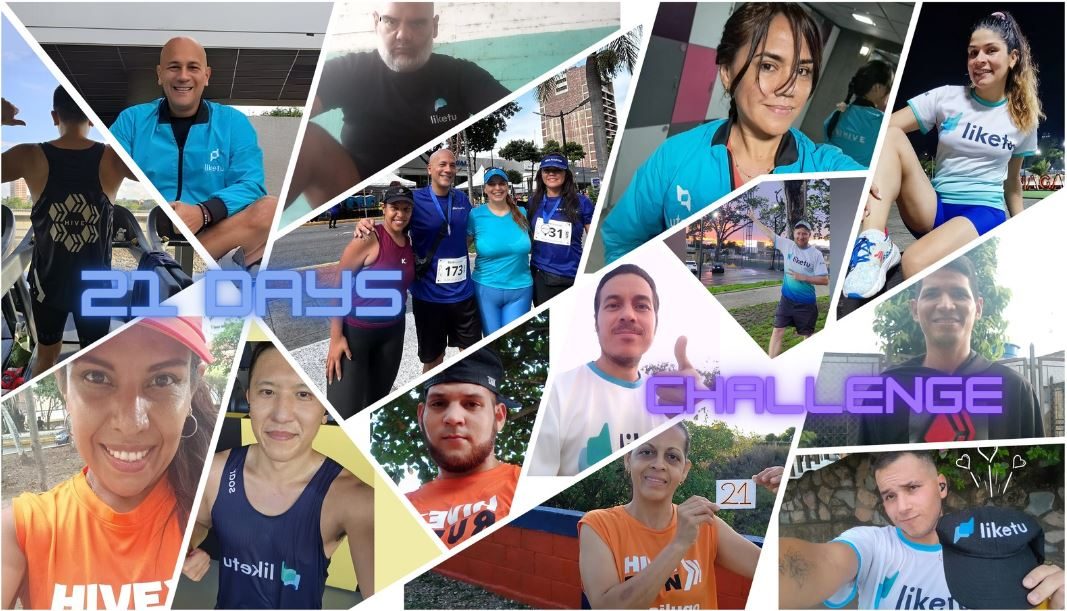
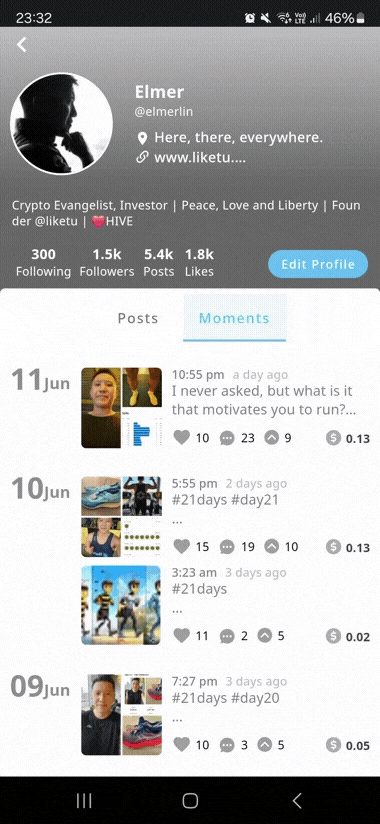
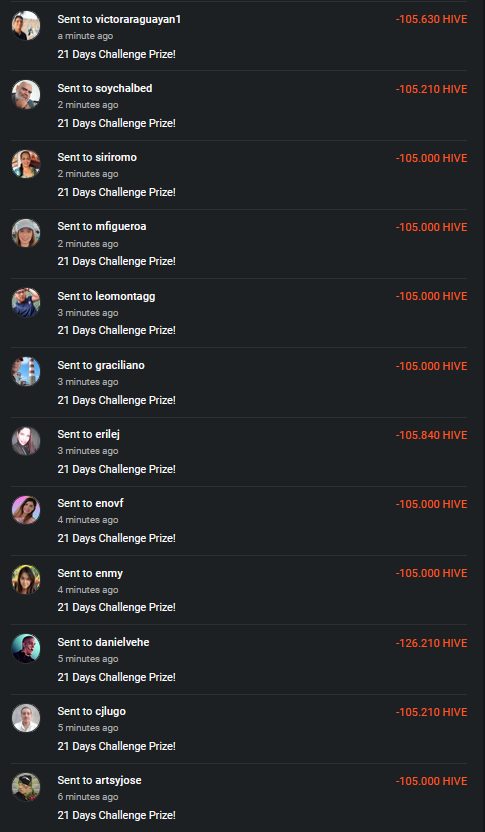
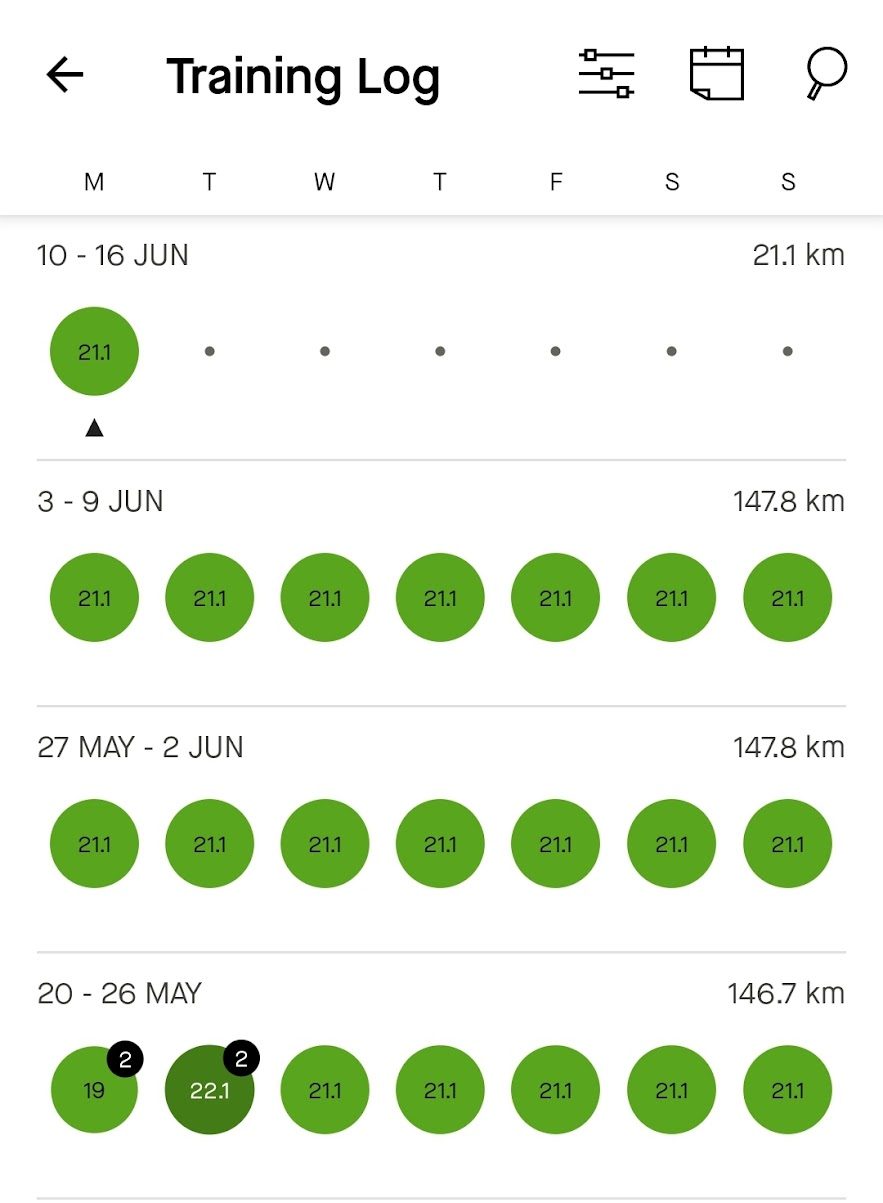
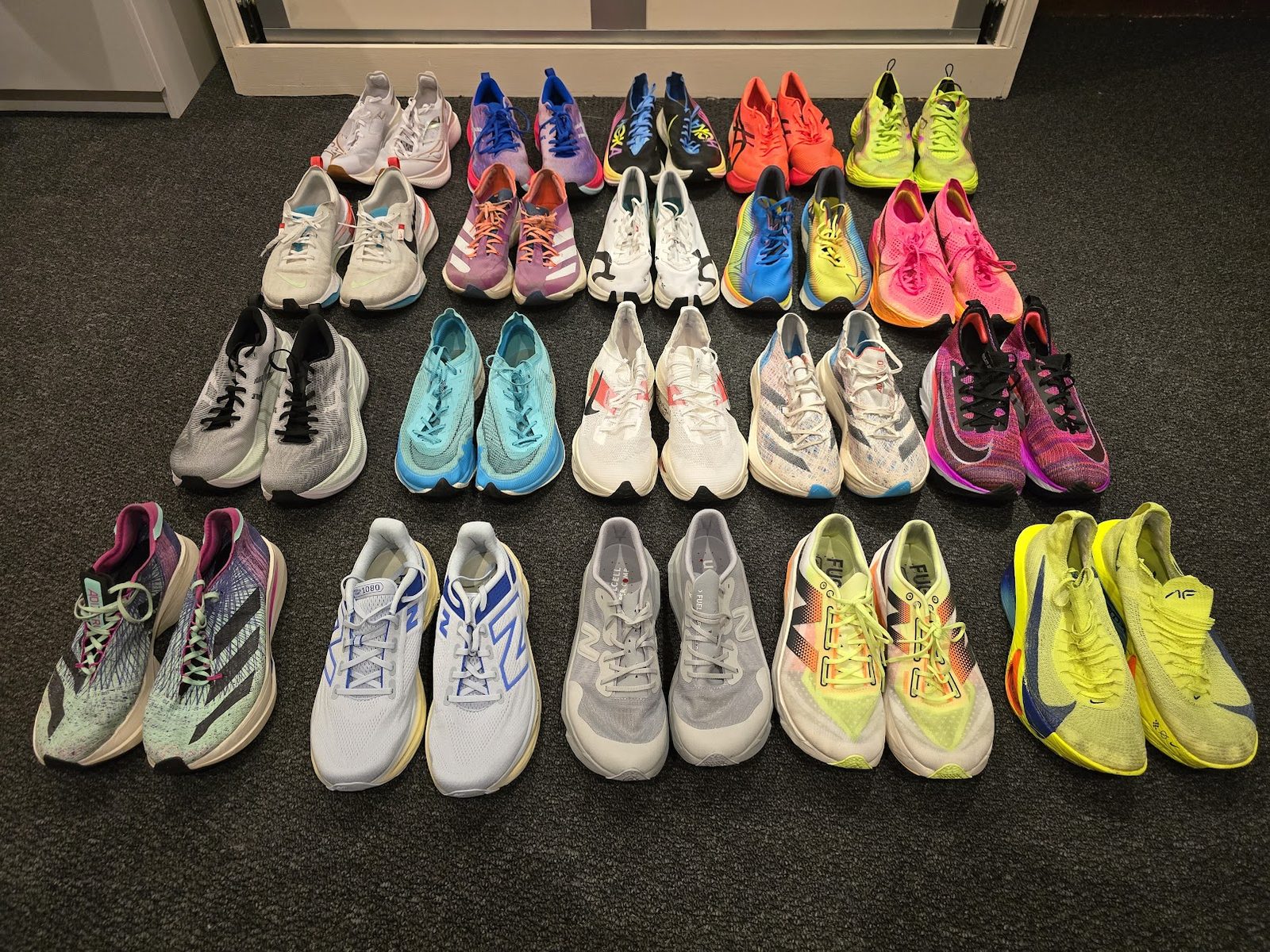
The self-funded HiveRun challenge is another example. Participants shared progress through Liketu Moments and collectively documented 1,823.13 kilometres, with 19 starters and 13 finishers. This is a documented example of participants using Liketu to share activity and organise a community challenge.
Explore Liketu
Explore what's already been built. Open Liketu, try Fitbook, browse Wild, or take the product tours to see the foundation this proposal will make public and continue developing.
| Link | What to explore |
|---|---|
| Try Liketu | Open the web application for visual publishing and community interaction on Hive. |
| Liketu product tour | Take a guided tour of publishing, community, and wallet features. |
| Fitbook · Fitbook tour | Explore digital closets, styling, virtual try-ons, lookbooks, and sharing looks on Hive. |
| Health and Run tour | See meal logging, run stories, private run imports, training trends, and coaching. |
| Wild | Explore Discover, the Field Guide, recent catches, species collections, and first finds. |
| Atlas · Atlas tour | Browse photo bubbles, place galleries, and personal travel journals. |
| Speak | Explore the visual voice grid, transcripts, conversations, and podcast features. |
The tours explain product features using different kinds of evidence. Fitbook's showcase people and images are fictional and AI-generated; Health uses demonstration profiles and anonymised running data. The rebuilt Atlas tour uses a dated snapshot of real public Hive posts, with creator credits. Tour figures are not current adoption metrics, and Atlas's indexed post counts should not be read as active Liketu users.
Future direction: The Wild Duels concept explores possible future gameplay. It is outside this proposal's committed milestones; any further work would depend on priorities and available capacity.
What Exists Today
This inventory includes the redesigned Wild, Atlas, and Speak experiences alongside Fitbook, Credits, Health and Run, and the wider social product. Wild, Atlas, and Speak were captured from the live web application on 15 November 2026, at desktop and phone widths. Older July captures and product demonstrations are labelled separately. These are existing work being brought into the public-source commitment. The funded roadmap remains focused on source release, reliability, onboarding, and mobile delivery, with current platform status and remaining issues recorded in the baseline report.
- a cross-platform Expo, React Native, and React Native Web application
- production web deployment and native iOS and Android builds
- mobile-first authentication and local Hive signing
- posting, comments, voting, follows, communities, beneficiaries, and reward options
- secure onboarding, account creation, referrals, and affiliate tooling
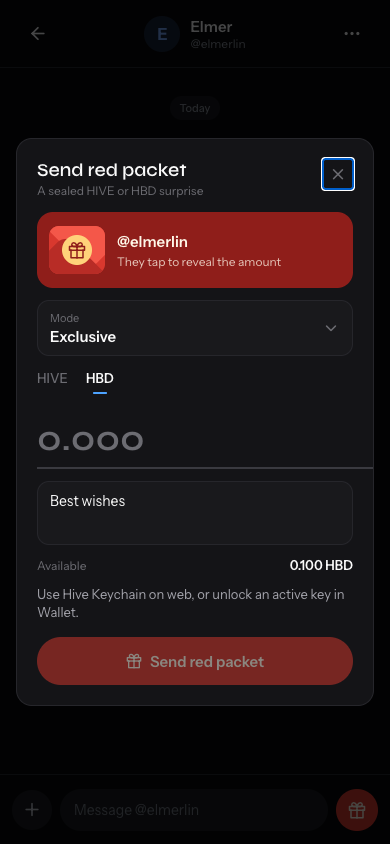
- photo publishing, Moments, Stories, Clips, voice posts, live Rooms, direct messages, and HIVE or HBD Red Packets
- media upload, compression, processing, storage, and indexing infrastructure
- notifications, inboxes, saved content, and return loops
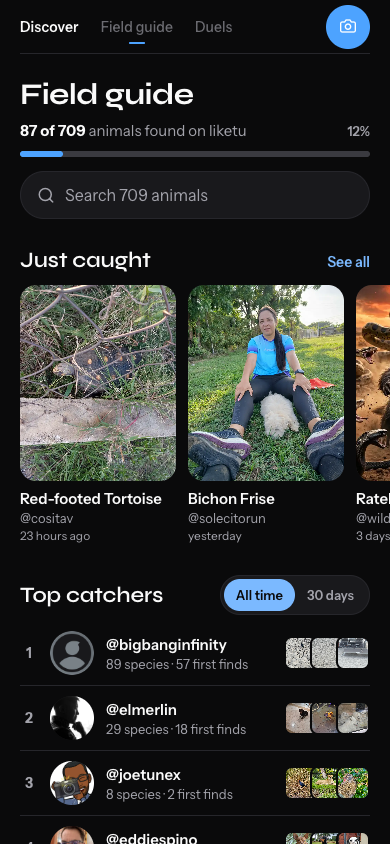
- Wild Discover, Field Guide explorer, species identification, collections, and first-finder records
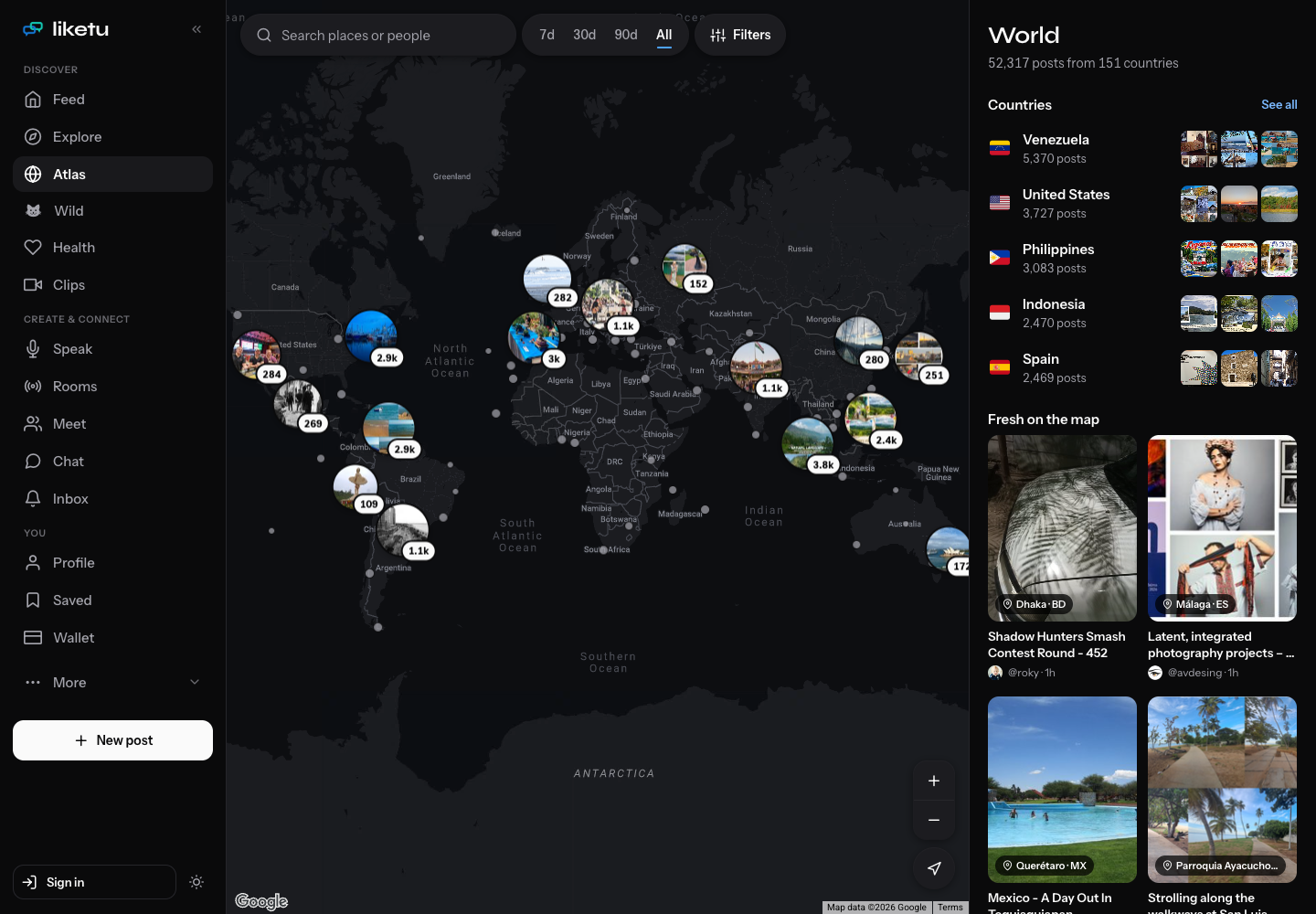
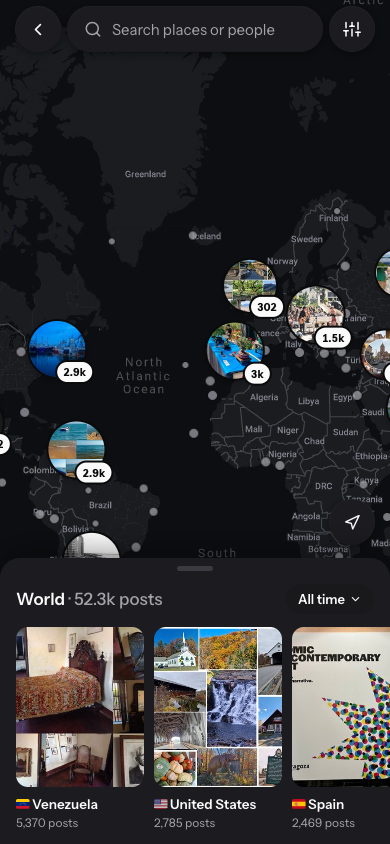
- Atlas photo-bubble maps, place galleries, travel journals, and location-sharing controls
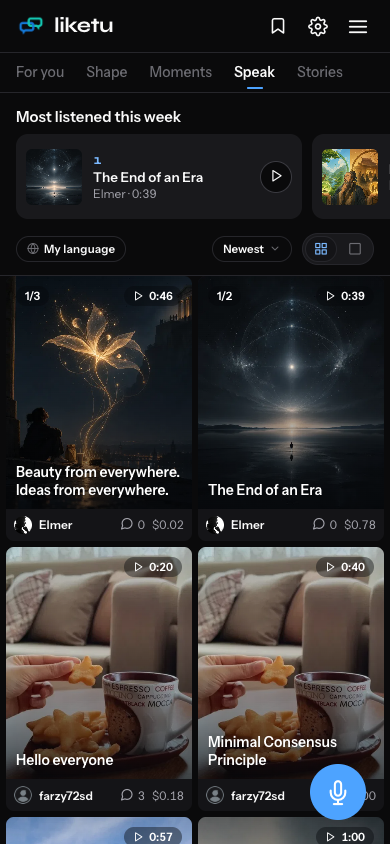
- Speak visual voice grid, scrolling transcripts, multipart posts, podcast episodes, shows, playlists, and RSS feeds
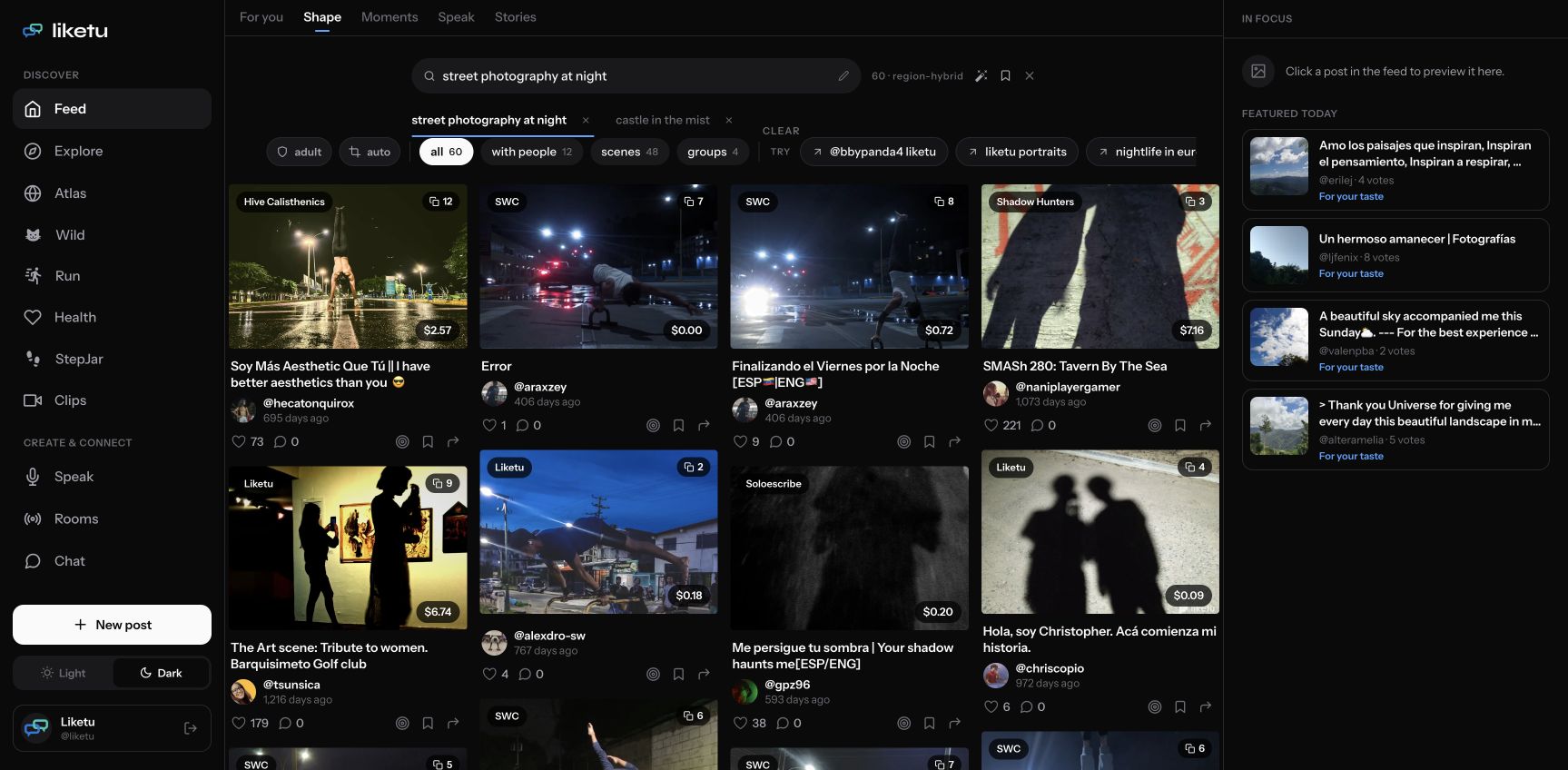
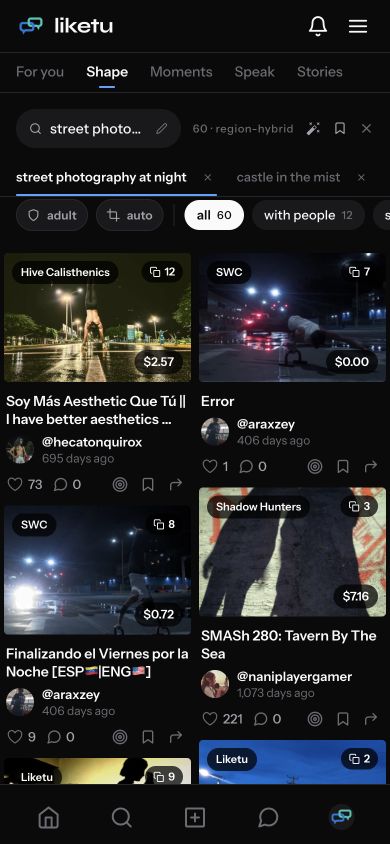
- Shape natural-language feed search and visual discovery
- Fitbook digital closets, outfit planning, virtual try-ons, lookbooks, style discovery, and Hive look and style posts
- Liketu Credits used by Fitbook for paid looks and try-ons, with HBD and card top-up flows
- Health meal logging and nutrition estimates; Run file imports, private training trends, coaching, and optional Hive run stories
- wallet, HBD, governance, market, and transaction groundwork
- DHF, proposal, token supply, community, app activity, and creator analytics
- growth, moderation, reporting, and administrative tools
These areas have different levels of readiness. Existing features will be distinguished from new delivery in the funded reports.
Fitbook And Liketu Credits
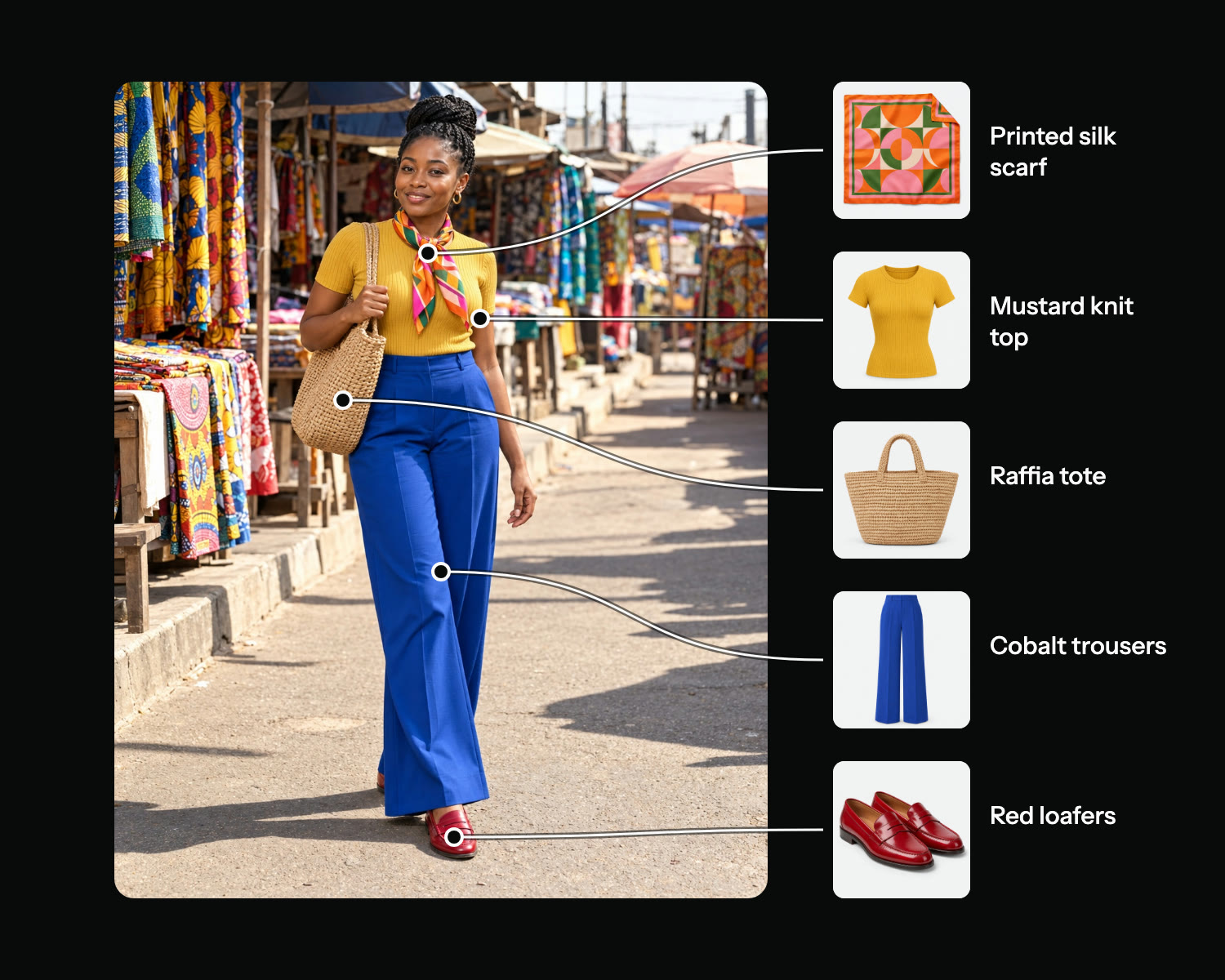
Fitbook builds a private digital closet from clothing in a person's Hive photos. It supports outfit suggestions, virtual try-ons, saved looks, outfit planning, lookbooks, and style discovery. People can choose to publish looks or style cards as ordinary Hive posts, with readable content on other front ends; sharing a style does not expose the private closet. Liketu Credits used by Fitbook support paid look generation and try-ons, connecting a practical use of the product to the sustainability work described above. The Fitbook tour shows how these features fit together. The existing application and server implementation are included in the source-release commitment.
Health And Run
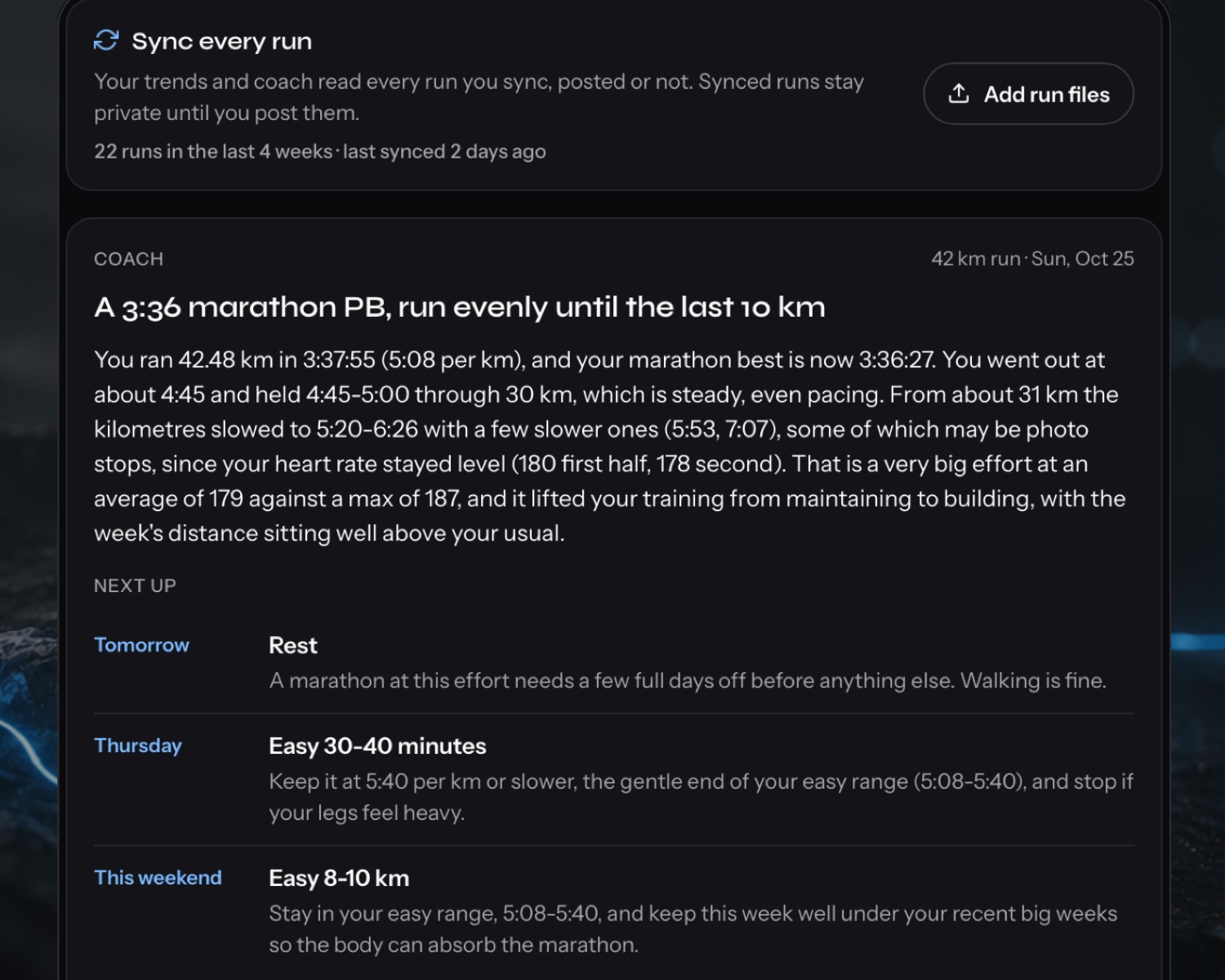
Health brings meal photos, nutrition estimates, and personal tracking into Liketu. Recent Run work adds private imports from run files, a run history, training-load and fitness trends, and a coach's notes with suggested next sessions. A runner can keep an imported run private or choose to publish it as a Hive story, including a coach's note. These features create reasons to return beyond browsing a feed, while leaving publishing under the user's control. The Health and Run tour demonstrates the experience. Device integrations and their testing status will be identified separately in the baseline report.
Feed Across Desktop And Mobile
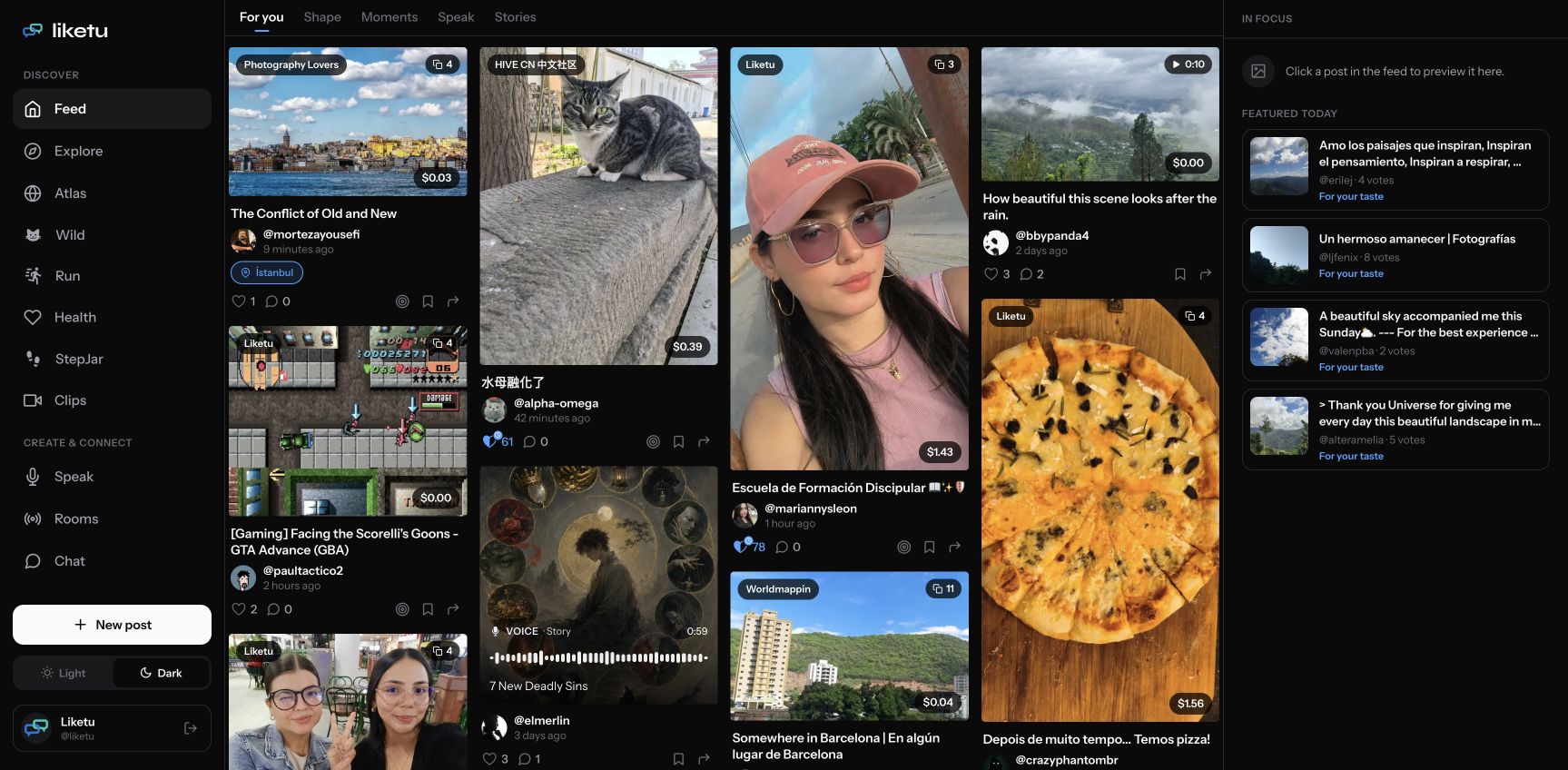
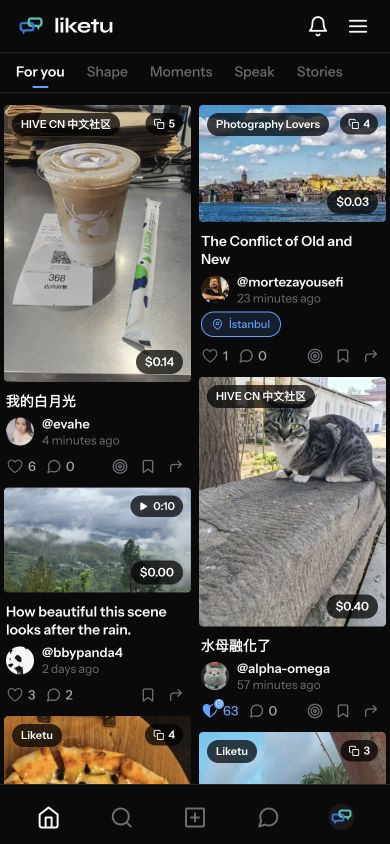
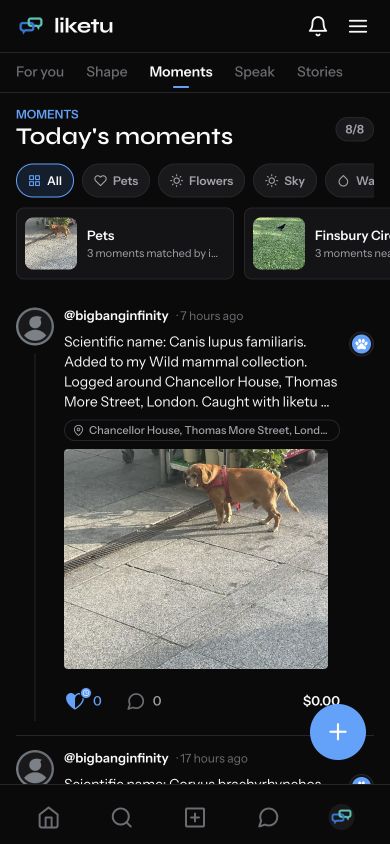
The liketu.net feed is built for visual discovery without hiding Hive underneath it. The desktop view supports dense browsing and focused reading, while the actual mobile interface keeps posting, discovery, search, messaging, and navigation within thumb reach.
Moments And Clips
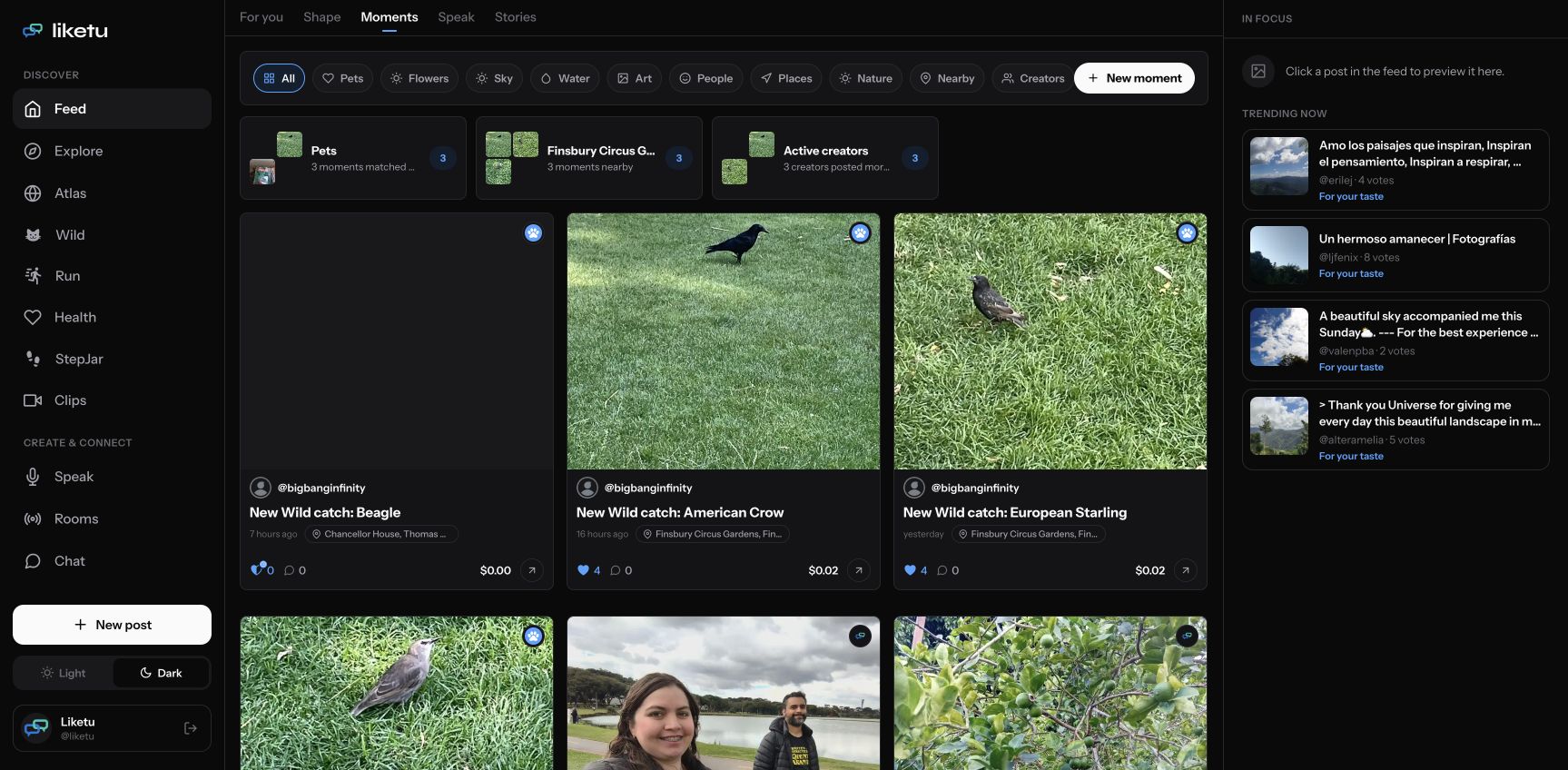
Liketu supports several social formats. Moments organise timely visual activity, while Clips provide a full-screen mobile video experience. These July captures document the earlier social foundation; the redesigned Speak experience follows separately.

Speak: Visual Voice And Podcasts
Speak now presents voices in a picture grid, with playback inside each tile, an avatar that responds to the voice, and a transcript that scrolls like lyrics. Multipart recordings can be browsed as a carousel. The redesigned thread brings the voice, replies, and related listening together. Longer recordings have a podcast workflow with episodes, shows, playlists, a queued player, and RSS feeds. This gives Hive creators another way to publish and audiences another way to discover their work. Open Speak to explore the current interface.
Wild: Discover And The Field Guide
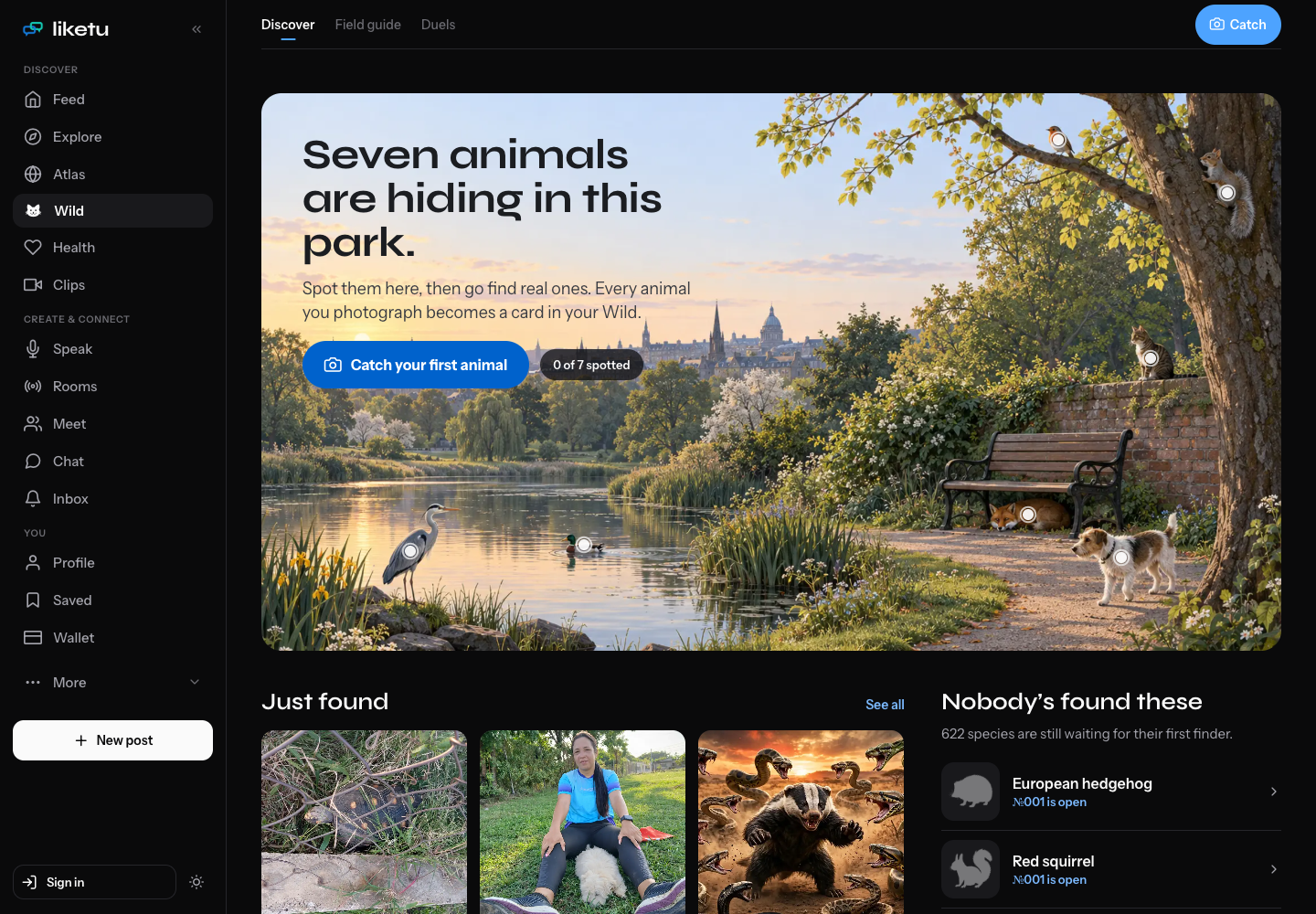
Wild connects animal photography on Hive with species identification, personal collections, and first-finder records. Its redesigned Discover experience introduces finding animals through an interactive scene, then leads into real community catches. The Field Guide now opens as an explorer with recent catches, top catchers, species collections, search, and species still waiting for a first find. A catch can also be added from an animal post, bringing collection into the normal publishing journey. Open Wild to see the current product.
Atlas: Photo Maps, Places, And Journals
Atlas has been rebuilt around photographs and the places behind them. Photo bubbles on the map open into country and city discovery, place galleries, and public Hive posts. Personal journals organise a creator's photos by country and city, with a time scrubber for exploring their travels. Location-sharing controls distinguish exact, approximate, area-only, and hidden locations. The redesigned Atlas makes existing Hive content easier to explore geographically; its tour also shows place pages and a travel journal using credited public posts.
Shape Search
Shape lets someone describe the feed they want in natural language and returns relevant Hive posts, adding a visual way to explore the network's existing photography.
Direct Messaging And Red Packets
Liketu includes direct and group messaging, with Red Packets that let people send a sealed HIVE or HBD surprise inside a conversation. This turns Hive value transfer into a social interaction rather than a separate wallet task.
Complete Visual Evidence Gallery
Additional announcement, product, and community records support the history above. Wild, Atlas, and Speak captures below are from 15 November 2026; retained July captures are labelled with their date.
Original Announcements And Legacy Product
Product Details By Capture Date
Community, Creators, And Merch






HiveRun Challenge Evidence
Source Links
- 2018 original Liketu announcement
- 2021 Liketu Hive launch announcement
- La Colonia Tovar event post 1
- La Colonia Tovar event post 2
- Hive's Red Carpet community post
- Audi merch winner post
- Audi Liketu Girl post
- Audi PeakD post: I Am A Liketu Girl
- Lunaticanto May 2023 merch post
- Lunaticanto: Debuting my Liketu merch
- Lunaticanto April 2024 merch post
- HiveFest community post
- HiveRun: 21 days to earn 1823 HIVE Kilometres